
10 Key Benefits of Hydrocolloid Dressings for Optimal Wound Healing

Why This “Old-School” Bandage Is Still a Gold Standard in Modern Care
If you’ve ever slapped on a basic adhesive bandage and hoped for the best, you’re not alone. But modern wound care has evolved far beyond cotton pads and crossed fingers. Enter hydrocolloid dressings — a science-backed, moisture-loving, quietly brilliant innovation that has been improving wound healing outcomes for decades.
Originally developed in the 1960s and popularized in advanced wound care during the 1980s, hydrocolloid dressings changed the way clinicians think about healing. Instead of letting wounds “dry out,” research now shows that moist wound healing accelerates tissue repair, reduces infection risk, and minimizes scarring.
Let’s break down the 10 key benefits — backed by data — and why hydrocolloid dressings remain a favorite in both hospitals and home care.
1. They Create the Ideal Moist Healing Environment
For decades, we thought wounds needed air to heal. Then science stepped in.
Studies published in wound care journals consistently show that moist wound environments can speed epithelialization (new skin growth) by up to 50% compared to dry healing. Hydrocolloid dressings form a gel when they interact with wound fluid, keeping the tissue hydrated without making it soggy.
Translation: faster healing, less cracking, less drama.
2. They Promote Faster Tissue Regeneration
Hydrocolloid dressings support autolytic debridement — the body’s natural process of breaking down dead tissue. Research shows that this gentle, self-driven process reduces the need for mechanical cleaning and can improve overall healing time in superficial wounds.
Less scraping. More science. Your skin approves.
3. They Reduce Pain
Pain during dressing changes is one of the biggest complaints in wound care. Traditional gauze can stick to the wound bed, turning removal into an unpleasant event.
Hydrocolloid dressings don’t adhere to the wound itself — only the surrounding skin. Clinical observations show significantly reduced pain during removal compared to dry dressings.
Because healing should not feel like peeling duct tape off a sunburn.
4. They Provide a Protective Barrier Against Bacteria
Hydrocolloid dressings form an occlusive or semi-occlusive seal. This barrier helps block external contaminants, reducing infection risk when properly applied.
According to wound management studies, maintaining a sealed moist environment lowers bacterial penetration compared to exposed wounds. While they are not antimicrobial by default, they significantly reduce outside contamination.
It’s like putting a tiny security system over your scrape.
5. They Stay in Place for Days
One of the biggest advantages? Extended wear time.
Hydrocolloid dressings can remain in place for 3 to 7 days depending on the wound type and exudate level. Fewer dressing changes mean:
• Less disruption to healing tissue
• Lower infection risk
• Reduced nursing time
• More convenience for home care
Your wound heals quietly while you live your life. Efficient and low-maintenance — we love that.
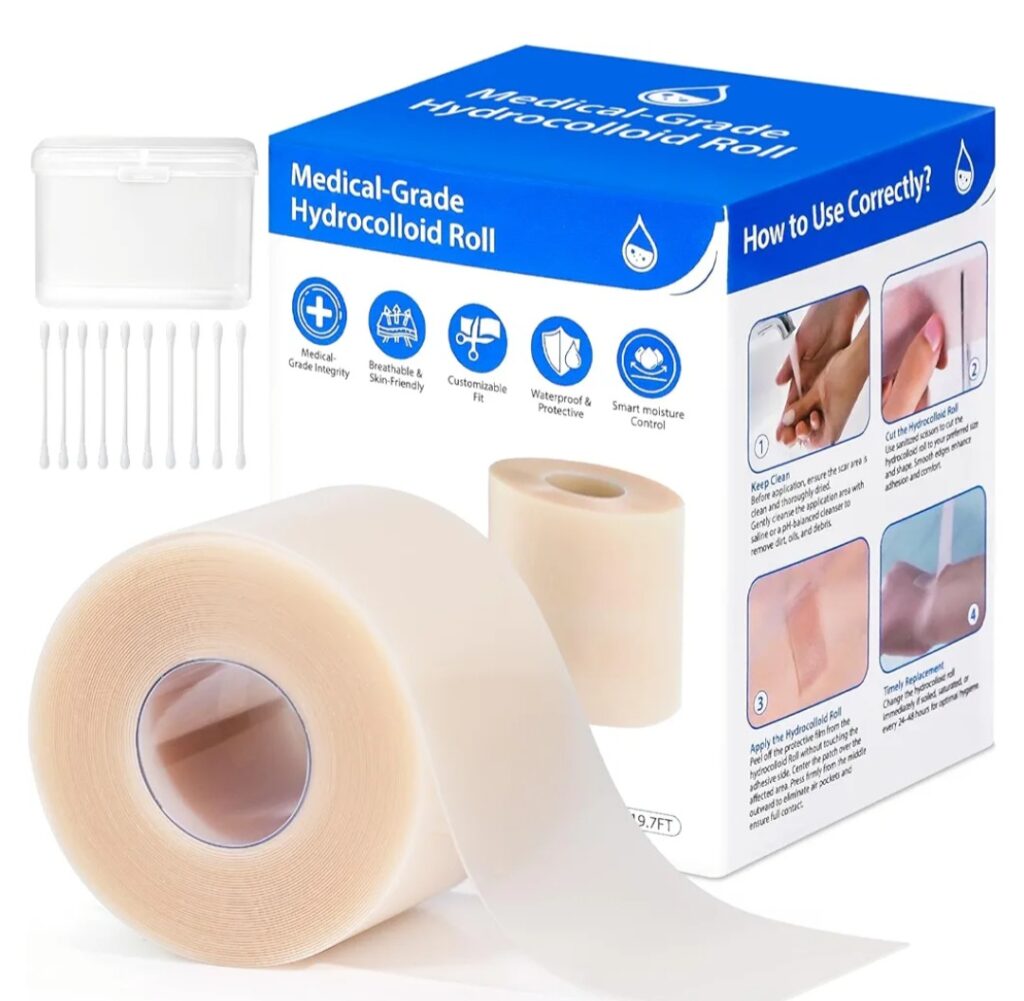
6. They Minimize Scarring
Research shows that maintaining a moist healing environment reduces collagen overproduction and excessive scab formation — two contributors to visible scarring.
By preventing the wound from drying and cracking, hydrocolloids support smoother skin regeneration. While no dressing eliminates scars entirely, evidence suggests moist healing improves cosmetic outcomes compared to traditional dry methods.
Less scab. Less tugging. Better long-term results.
7. They Absorb Light to Moderate Exudate
Hydrocolloids are ideal for wounds that produce mild to moderate drainage. The inner gel-forming layer absorbs fluid and locks it in, preventing maceration (that white, soggy skin effect).
Clinical wound care guidelines often recommend hydrocolloids for:
• Minor burns
• Pressure ulcers (Stage I–II)
• Surgical wounds
• Abrasions
• Blisters
They’re not for heavily draining wounds — but for the right case, they’re excellent.
8. They Reduce Dressing Change Frequency (Which Saves Money)
Healthcare cost analyses show that fewer dressing changes reduce overall treatment costs — even if the individual dressing is slightly more expensive upfront.
Less frequent changes mean:
• Reduced supply use
• Lower labor costs in clinical settings
• Better patient comfort
• Improved compliance
Sometimes the “better” option is also the smarter financial choice.
9. They Improve Patient Compliance
When something is comfortable and convenient, people are more likely to use it correctly.
Studies in outpatient wound care show improved adherence when dressings are easy to apply, stay in place, and don’t require daily disruption. Hydrocolloids check all three boxes.
If your wound care plan doesn’t feel like a part-time job, you’re more likely to stick with it.
10. They Support the Body’s Natural Healing Intelligence
Here’s the fascinating part: your body already knows how to heal.
Hydrocolloid dressings don’t “heal” wounds themselves. Instead, they optimize the environment so your body’s inflammatory, proliferative, and remodeling phases can function efficiently.
By maintaining hydration, temperature stability, and protection, these dressings support the body’s natural biological timeline — which is how healing is supposed to work.
Sometimes the best technology simply gets out of the way.
When Hydrocolloids Are Not Ideal
To keep this factual and balanced: hydrocolloid dressings are not recommended for:
• Heavily infected wounds
• Deep cavity wounds
• Heavy exudate wounds
• Fragile periwound skin
Proper wound assessment is essential. When in doubt, consult a qualified healthcare provider.
The Bottom Line
Hydrocolloid dressings may not be flashy, but they are one of the most studied and reliable options in modern wound care. By creating a moist, protected environment, they support faster healing, reduce pain, minimize scarring, and improve overall patient comfort.
Sometimes optimal healing isn’t about doing more — it’s about doing it smarter.
If you love exploring science-backed solutions for living stronger in your body and making empowered health decisions, visit MindBodySpiritLife.com. We dive into research, question assumptions, and celebrate the body’s incredible ability to heal when given the right tools.
Stay curious. Stay informed. And take care of the skin you’re in.