9 Fascinating Reasons Karma Yoga Might Be the Stress Cure We Forgot
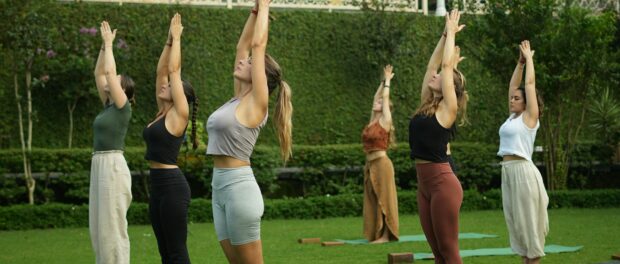
Some people go to yoga for abs.
Some go for flexibility.
Some go because their friend dragged them there and promised smoothies afterward.
But karma yoga? That’s a whole different animal.
Karma yoga isn’t about twisting yourself into a human pretzel while pretending your hamstrings aren’t screaming. It’s often called the “yoga of action” or “the yoga of selfless service.” In simple terms, it means doing good things without obsessing over rewards, applause, likes, trophies, gold stars, or Karen from Facebook finally approving of your life choices.
And surprisingly…science says this ancient philosophy may be incredibly good for your brain, body, relationships, stress levels, and even longevity.
Turns out humans are wired to feel better when they help each other. Imagine that.
The ancient yogis figured this out thousands of years ago without wearable fitness trackers, protein powder, or podcasts hosted by shirtless millionaires sitting in cold plunges.
Here’s why karma yoga is suddenly making modern science raise its eyebrows.
1 Karma Yoga May Reduce Stress Hormones
Modern life keeps many people stuck in “fight or flight” mode. Emails. Bills. Traffic. Notifications. That one sock that disappears in every laundry cycle.
Research from Carnegie Mellon University found that volunteering and helping others is associated with lower stress levels and improved emotional resilience. Several studies also suggest acts of compassion may reduce cortisol, the body’s primary stress hormone.
That means helping your neighbor move a couch might literally calm your nervous system.
Unless it’s one of those giant reclining sectionals from the seventh floor with no elevator. Then all bets are off.
Yoga philosophy teaches that attachment to outcomes creates suffering. Karma yoga encourages people to focus on the action itself instead of obsessing over results.
Ironically, when people stop clinging so tightly to outcomes, the nervous system often relaxes.
It’s hard to reach inner peace while rage-refreshing your social media analytics every 11 seconds.
2 Helping Others Can Actually Improve Physical Health
One study published in BMC Public Health found people who volunteered regularly had lower rates of depression, greater life satisfaction, and even improved overall health outcomes.
Researchers have also linked altruistic behavior with reduced blood pressure and healthier aging.
Yes, apparently your body enjoys kindness almost as much as it enjoys magnesium and naps.
In one study from the University of Michigan, older adults who helped others consistently had a lower risk of mortality over several years compared to those who didn’t engage in supportive behaviors.
Ancient yogis called this “seva,” or selfless service.
Modern science calls it “interesting biomarkers.”
Different outfit. Same truth.
3 Karma Yoga May Rewire the Brain for Happiness
Neuroscience has discovered something fascinating: generosity activates reward centers in the brain.
Functional MRI scans have shown that acts of giving can stimulate dopamine and oxytocin pathways associated with pleasure, bonding, and emotional warmth.
Basically, your brain throws a tiny biochemical party when you do something kind.
Researchers sometimes refer to this as the “helper’s high.”
And unlike doom-scrolling at 2 a.m., this one usually leaves you feeling better afterward.
A study from the National Institutes of Health found that prosocial behavior can strengthen positive emotional states and increase overall psychological well-being.
Translation: being a decent human may literally upgrade your operating system.
The yogis are somewhere in the cosmos saying, “We told you so.”
4 It Can Make Your Yoga Practice More Meaningful
For many people, yoga starts as physical exercise and eventually becomes something deeper.
Karma yoga adds purpose to movement.
Instead of asking:
“What can I get?”
It asks:
“What can I give?”
That subtle shift changes everything.
Studies on purpose-driven living consistently show that people with a stronger sense of meaning tend to report higher happiness levels, lower anxiety, and even improved immune function.
Researchers from Harvard’s T.H. Chan School of Public Health found having a strong sense of purpose in life was associated with healthier behaviors and lower mortality risk.
Suddenly yoga becomes less about looking cute in leggings and more about how you treat people when somebody steals your parking spot.
That’s the advanced class.
5 Selfless Service Can Improve Mental Health
Depression and anxiety have become incredibly common worldwide.
The World Health Organization estimates hundreds of millions of people struggle with mental health conditions globally.
While karma yoga is not a replacement for professional care, studies suggest helping others may positively impact emotional well-being.
Research published in The Journal of Happiness Studies found that performing acts of kindness can improve mood and increase life satisfaction.
One reason may be that selfless action interrupts excessive self-focus.
When people become trapped in constant rumination, the brain can spiral into stress and negativity.
Helping someone else can gently shift attention outward.
And honestly, sometimes the fastest way out of your own mental fog is to brighten somebody else’s day.
Even if it’s as simple as complimenting a stranger, checking on a friend, or not honking at someone who forgot the light turned green because they were probably having an existential crisis in the Taco Bell drive-thru.
6 Karma Yoga Encourages Emotional Detachment—Not Apathy
This is where people get confused.
Karma yoga does not mean becoming emotionless like a cucumber monk floating in space.
It means learning to act with heart while releasing unhealthy attachment to outcomes.
That’s a massive difference.
Psychologists have found that excessive attachment to outcomes can increase anxiety, perfectionism, and emotional burnout.
People often suffer not because they care, but because they cling.
Karma yoga teaches:
Do your best.
Act with integrity.
Release the obsession.
That mindset may help reduce chronic emotional exhaustion, especially in caregivers, teachers, healthcare workers, parents, and people who answer customer service emails for a living.
Those people deserve free massages and unlimited guacamole.
7 Community Connection Is Linked to Longer Life
Humans are social creatures, even the introverts who hiss when the doorbell rings.
Research from Brigham Young University found social connection has a major impact on longevity. Some analyses suggest strong social relationships may increase survival odds similarly to quitting smoking.
That’s huge.
Karma yoga naturally strengthens community because it encourages contribution instead of constant competition.
Instead of:
“How do I get ahead?”
It asks:
“How do we support each other?”
Ancient yoga traditions often centered around community service, shared meals, caregiving, and mutual support.
Turns out your nervous system likes cooperation more than endless comparison.
Your brain doesn’t necessarily need another productivity hack.
Sometimes it just needs human connection and maybe a beach sunset.
8 Karma Yoga May Help Reduce Ego-Driven Burnout
Modern culture often rewards nonstop hustle.
More money.
More followers.
More status.
More productivity.
More things to organize in your garage and forget about later.
But research increasingly shows chronic overachievement without emotional balance can contribute to burnout.
The World Health Organization officially recognizes burnout as an occupational phenomenon tied to chronic workplace stress.
Karma yoga offers a counterbalance.
It encourages action without making identity completely dependent on achievement.
That’s powerful.
Because if your entire self-worth collapses every time life doesn’t go according to plan, your nervous system never gets a vacation.
Karma yoga gently reminds people:
You are more than your metrics.
Honestly, some people need that tattooed on their forehead next to “drink water.”
9 Ancient Wisdom and Modern Science Are Finally Meeting
For thousands of years, yogic traditions taught that selfless action purifies the mind, reduces suffering, and creates inner peace.
Now modern psychology, neuroscience, and health research are beginning to uncover evidence supporting many of those ideas.
No, karma yoga probably won’t magically turn you into a floating enlightened superhero who survives entirely on moonlight and herbal tea.
But it might help you become calmer, healthier, kinder, more connected, and less trapped in the endless chaos of modern stress culture.
And honestly?
That’s already pretty miraculous.
You don’t have to move to a mountaintop.
You don’t need expensive gear.
You don’t even need perfect yoga poses.
Karma yoga can begin with tiny actions:
Helping someone.
Listening fully.
Offering kindness.
Serving your community.
Showing compassion without needing applause afterward.
Simple.
Ancient.
Powerful.
In a world obsessed with “What do I get?”
karma yoga quietly asks a revolutionary question:
“What happens when we give?”
And maybe that question is exactly what modern humanity needs right now.
At MindBodySpiritLife.com, we love exploring the fascinating intersection of ancient wisdom, modern science, wellness, mindfulness, movement, and meaningful living. Visit the site often for more uplifting articles designed to help you feel healthier, calmer, stronger, and maybe laugh a little along the way too.