
2 Weeks of Only Whole Foods:What Happened Shocked Researchers
Let’s talk about what happens when you take away the neon-orange snacks, the “high-protein” cookies, the fortified cereal that tastes like dessert, and the mysterious ingredient list that reads like a chemistry final.
Researchers revisited data from a tightly controlled feeding study funded by the National Institutes of Health, and what they found is both fascinating and quietly hilarious.
Because when humans were given unlimited access to only whole, unprocessed foods for 2 weeks…
They didn’t rebel.
They didn’t starve.
They didn’t cry into a bowl of quinoa.
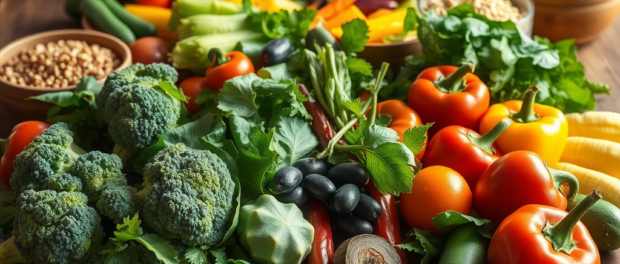
They loaded up on vegetables like their bodies had been waiting for this moment.
The Study Setup (Because Science Matters)
Participants lived in a controlled setting and rotated through:
- 2 weeks eating ultra-processed foods
- 2 weeks eating only unprocessed, whole foods
Important detail:
Both diets were matched for calories, carbs, fat, protein, fiber, sugar, and sodium.
They could eat as much as they wanted.
No restriction. No calorie caps.
Same macros. Same nutrients on paper.
Different outcomes in real life.
What Happened on Whole Foods?
During the whole-food phase:
- Participants ate 57% more food by weight
- Yet consumed about 330 fewer calories per day
- And reported feeling satisfied
Let that land.
They ate more volume… and fewer calories.
Why?
Because 1 pound of broccoli does not equal 1 pound of ultra-processed snack cakes. Your stomach registers volume. Your hormones respond to fiber. Your brain gets time to catch up.
Some participants ate more than 500 grams of vegetables in a single meal. That’s over a pound of greens.
Meanwhile, calorie-dense whole foods like pasta were available… but they weren’t aggressively overconsumed.
No one needed to “try harder.” It just happened naturally.
Your Body Is Not Dumb
Researchers believe this may come down to micronutrients — vitamins and minerals your body actually needs to function.
Iron. Folate. Magnesium. Vitamin A. Zinc.
When you eat minimally processed foods, there’s a natural separation between calorie-dense items and nutrient-dense produce. So your body has to balance both.
It’s like an internal whisper:
“Energy is fine… but we’re low on magnesium. Kindly grab the spinach.”
The body appears to prioritize nutrient sufficiency. If you only eat calorie-heavy foods and skip produce, deficiencies eventually develop.
Researchers describe this as a kind of nutrient-driven regulation — your system subtly guiding you toward foods that meet micronutrient needs.
No app required.
Why Processed Foods Disrupt This
Here’s the twist.
Ultra-processed foods are often fortified. That means vitamins and minerals are added back in.
So now calories and micronutrients come bundled together.
Cereal? Fortified.
Snack bars? Fortified.
Frozen waffles? Fortified.
When calorie-dense foods also meet micronutrient needs, your body no longer has a reason to seek out lower-calorie produce.
The built-in tension disappears.
In the processed phase of the study, participants consumed significantly more calories per day — even though the diet was carefully matched on paper.
Hyper-palatable + convenient + fortified = appetite regulation quietly overridden.
This isn’t about willpower.
It’s about design.
The Bigger Picture
More than 60% of the average American diet comes from ultra-processed foods. Some research suggests it’s closer to 70%.
That means most people live in a food environment that constantly stimulates appetite without triggering fullness properly.
Whole foods slow you down:
- More chewing
- More fiber
- More water content
- More volume
- Slower eating
All of that improves satiety signaling.
Processed foods speed everything up.
Fast chew. Fast swallow. High reward. Minimal friction.
And then we wonder why hunger feels chaotic.
What This Means for You
The takeaway isn’t “never touch processed food again.”
It’s simpler than that.
When whole foods form the foundation of your meals, appetite often regulates itself.
Try this:
• Build meals around vegetables, fruit, lean protein
• Focus on variety instead of calorie math
• Let fullness come from volume and fiber
• Use processed foods as extras, not the base
You don’t have to micromanage your body when you stop confusing it.
The Real Takeaway
Humans may not be wired to chase calories.
We may be wired to chase nutrients.
When food is minimally processed, that instinct works in your favor.
When food is engineered for convenience and reward, the system glitches.
The solution isn’t harsher restriction.
It’s smarter structure.
Give your body real food more often. Let biology do what it was designed to do. You might discover your appetite is far wiser than you were told.
And if your plate occasionally looks like a farmers market exploded on it? That’s not extreme. That’s alignment.
At MindBodySpiritLife.com, we believe small, intentional shifts create powerful ripple effects in your body and your life. If you love practical wellness backed by science — with a little humor and a lot of heart — explore more articles, share your favorites, and visit often. Let’s keep learning, growing, and nourishing this one beautiful life we get.