
The Quiet Discipline of Solitude

In modern culture solitude is often misunderstood. It is frequently confused with loneliness, isolation, or withdrawal from life. Yet these are very different states of being. Loneliness is a condition of absence, a feeling that something essential is missing. Solitude, by contrast, is a deliberate condition of presence. It is the conscious choice to stand within one’s own company without distraction, noise, or constant external validation.
True solitude is not empty. It is structured, purposeful, and quietly transformative.
For many people the idea of being alone with their own thoughts produces immediate discomfort. The modern environment encourages constant stimulation. Notifications, conversation, media streams, and digital noise fill nearly every available moment. Silence becomes unfamiliar. Stillness becomes awkward. Many people have never learned how to inhabit their own minds without interruption.
Yet throughout human history solitude has been the workshop of clarity.
Philosophers withdrew to think. Writers isolated themselves to create. Spiritual traditions across the world incorporated periods of silence, retreat, and contemplation. Not because solitude was an escape from reality, but because it was the most direct way to examine it.
Solitude reveals things that noise conceals.
When external input is reduced, internal processes become more visible. Thoughts that normally remain buried beneath constant distraction begin to surface. Ideas connect. Patterns appear. Unresolved tensions become easier to recognize. Creativity, which often requires uninterrupted mental space, begins to operate more freely.
This is why so many creative breakthroughs occur during quiet walks, long drives, or solitary mornings. The mind requires room to assemble its pieces.
However, meaningful solitude does not happen automatically. It is a discipline.
Just as physical strength develops through consistent training, mental clarity grows through repeated exposure to quiet attention. The first encounters with solitude can feel restless. The mind may wander erratically. Many people instinctively reach for their phone, turn on a screen, or seek conversation simply to escape the unfamiliar sensation of mental stillness.
But if one remains with the experience, something subtle begins to shift.
The mind gradually settles. Thoughts slow down. Awareness deepens. The inner landscape becomes easier to observe without reacting to every impulse that appears.
Over time solitude becomes less like an empty room and more like a spacious landscape. One begins to notice details that were always present but rarely observed.
Solitude also strengthens independence of thought.
In a society saturated with opinions, trends, and social pressure, it becomes increasingly difficult to distinguish one’s authentic perspective from the influence of surrounding voices. Continuous exposure to external narratives can quietly shape beliefs without conscious awareness.
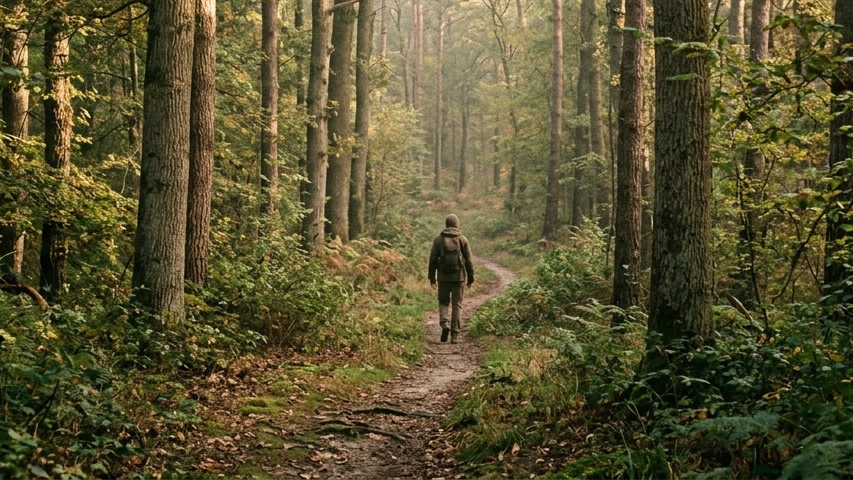
Solitude interrupts that process.
When a person steps away from constant input, the mind regains its ability to evaluate ideas rather than simply absorb them. Reflection replaces reaction. Personal conclusions emerge not from social momentum but from careful examination.
This is why individuals who regularly cultivate solitude often develop a stronger sense of internal orientation. They learn to trust their own reasoning because they have spent time observing how their thoughts actually form.
There is also a psychological resilience that develops through solitude.
A person who is comfortable alone is less dependent on external affirmation for stability. This does not mean rejecting relationships or community. Human connection remains deeply valuable. Rather, solitude provides a foundation that prevents identity from becoming entirely dependent on the presence or approval of others.
The individual learns that inner stability can exist regardless of circumstance.
This quiet confidence alters the way a person moves through the world. Conversations become more intentional. Decisions become less reactive. Emotional responses become easier to examine before acting on them.
Solitude also sharpens sensory awareness.
When distractions diminish, the environment becomes more vivid. The sound of wind moving through trees becomes noticeable. The rhythm of footsteps on a path becomes distinct. Subtle shifts in mood, posture, and breathing become easier to detect.
This heightened awareness often produces an unexpected sense of calm. The mind no longer struggles to track dozens of simultaneous inputs. Attention returns to the immediate moment.
Many people discover that solitude is not merely a mental exercise but a physical one as well. The body relaxes when it is no longer forced to process constant stimulation. Breathing deepens. Muscles release unnecessary tension. The nervous system shifts toward balance rather than perpetual alertness.
In this sense solitude functions as a form of psychological restoration.
Yet the most profound aspect of solitude may be its ability to clarify direction.
When the noise of expectation fades, a simple question emerges with surprising force. What truly matters? Without the pressure of constant comparison or social measurement, priorities become easier to evaluate.
Goals that once seemed important may reveal themselves as distractions. Interests that were quietly ignored may return with renewed energy. Personal values become easier to articulate because they are no longer buried beneath external influence.
This process is rarely dramatic. It unfolds gradually through repeated encounters with silence and reflection.
A person who practices solitude consistently begins to recognize its subtle signals. Moments of quiet thinking become opportunities rather than empty intervals to be filled. Time alone transforms from something to avoid into something to protect.
This shift changes the relationship one has with time itself.
Instead of racing from stimulus to stimulus, life begins to include deliberate pauses. These pauses allow experiences to settle into understanding rather than disappearing into the blur of constant activity.
Of course, solitude does not require isolation from society. It simply requires intentional boundaries around attention.
A quiet walk without headphones. An hour of reading without digital interruptions. A morning spent writing thoughts onto paper rather than scrolling through endless updates. These small practices accumulate into a powerful habit of internal clarity.
The discipline lies not in dramatic retreats from the world but in consistent moments of undisturbed awareness.
Over time solitude becomes less about being physically alone and more about maintaining an internal space that remains calm even in the presence of activity. The mind learns to step back from noise without needing to escape it entirely.
This is the deeper purpose of the quiet discipline.
Solitude does not remove a person from life. Instead it sharpens the ability to engage with life more thoughtfully. It provides the mental distance required to observe before reacting, to reflect before deciding, and to create before conforming.
In a world that constantly demands attention, solitude quietly restores ownership of it.
And within that reclaimed attention lies one of the most valuable capacities a person can cultivate: the ability to hear one’s own mind clearly.