
February Is Not Too Early: Laying the Groundwork for a Successful Spring Garden

February often feels like a waiting month. The excitement of spring is still out of reach, the soil may be frozen or saturated, and many gardeners assume there is little to be done but watch the calendar. In reality, February is one of the most important months of the gardening year. What you do now quietly determines how smooth, productive, and enjoyable your spring garden will be.
Preparation is not busywork. It is respect for natural timing. A successful garden is rarely the result of last minute effort. It is built through observation, readiness, and restraint.
This is not the month for planting. It is the month for laying groundwork.
Begin With the Soil, Not the Seeds
Healthy soil is the foundation of everything that follows. February is ideal for assessing its condition because winter exposes problems that summer growth often hides.
Walk your garden beds and observe how water moves across them. Note where puddles collect and where soil dries first. Pay attention to compaction, erosion, and surface crusting. If the soil is workable, gently loosen it without over turning. If it is frozen or too wet, leave it alone and simply observe.
This is also the right time to add organic matter. Compost, leaf mold, aged manure, and natural amendments can be spread now and allowed to integrate slowly. Freeze thaw cycles help break material down and improve structure long before planting begins.
Avoid the urge to rush. Soil improves through patience, not force.

Take Inventory of Tools and Equipment
February is a gift of time. Use it.
Inspect every tool you rely on. Sharpen blades. Oil wooden handles. Replace broken or unnecessary equipment. If something has not been used in two seasons, question whether it belongs in your garden at all.
A lean, well maintained set of tools saves time, energy, and frustration once the work accelerates. Spring is not the season for repairs. It is the season for use.
Review Last Year With Honesty
Before planning anything new, look back carefully.
Which crops thrived and which struggled. Where did pests appear repeatedly. Which areas were shaded longer than expected. Where did plants outgrow their space.
February is when reflection turns into improvement. Make notes. Sketch simple layouts. Adjust spacing, rotation, and placement now, while there is no pressure to act immediately.
This kind of review separates experienced gardeners from reactive ones.
Sort, Test, and Choose Seeds Thoughtfully
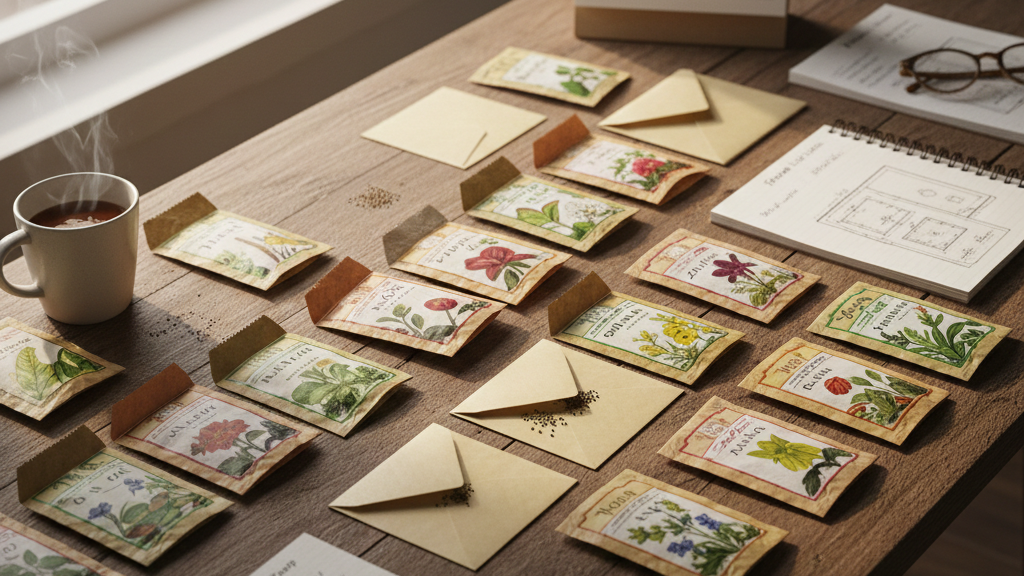
Pull out every seed packet you own. Check dates and storage conditions. Discard what is clearly no longer viable. For older seed, perform simple germination tests indoors rather than gambling later in the season.
When selecting new varieties, prioritize reliability over novelty. Choose plants suited to your climate, soil, and available time. Marketing promises do not grow food. Compatibility does.
February is also the moment to resist over planning. A focused garden is easier to manage and far more productive than an ambitious one that spreads attention too thin.
Build Fertility Before It Is Needed
Nutrients applied at the right time work better than nutrients applied in haste.
Start or turn compost piles now. Collect natural inputs like leaves, wood ash where appropriate, and kitchen scraps. If you use liquid composts or ferments, begin preparing them early so they are ready when growth begins.
Fertility is most effective when it is available before plants ask for it.

Observe Winter Light, Wind, and Moisture
Winter shows you truths that summer conceals.
Low sun angles reveal which areas truly receive full light. Bare ground exposes wind patterns. Snow melt and rain show drainage paths and frost pockets.
Stand still and watch. These observations cost nothing and pay dividends all season long. Many garden failures are the result of ignoring conditions that were visible months earlier.
Prepare the Mindset as Much as the Land
Gardening is not seasonal work. It is a year round relationship.
February invites a slower pace, thoughtful decisions, and intentional restraint. It reminds us that growth is built long before it is visible. The calm, preparatory work done now creates confidence later, when planting accelerates and conditions change quickly.
Spring rewards those who arrive ready rather than rushed.
If you do nothing else this month, walk your garden. Touch the soil. Take notes. Prepare quietly.
February is not too early. It is exactly on time.