
7 Potential Benefits of EBOO — The Treatment Nicknamed the Human Oil Change

Imagine taking your car in for an oil change—old fluid circulates out, everything gets refreshed, and you drive away hoping the engine runs a little smoother.
Now imagine something vaguely similar happening with your blood.
That colorful comparison is why EBOO—Extracorporeal Blood Oxygenation and Ozonation—is sometimes nicknamed the “human oil change.” It sounds futuristic, but the basic concept has actually been studied for decades.
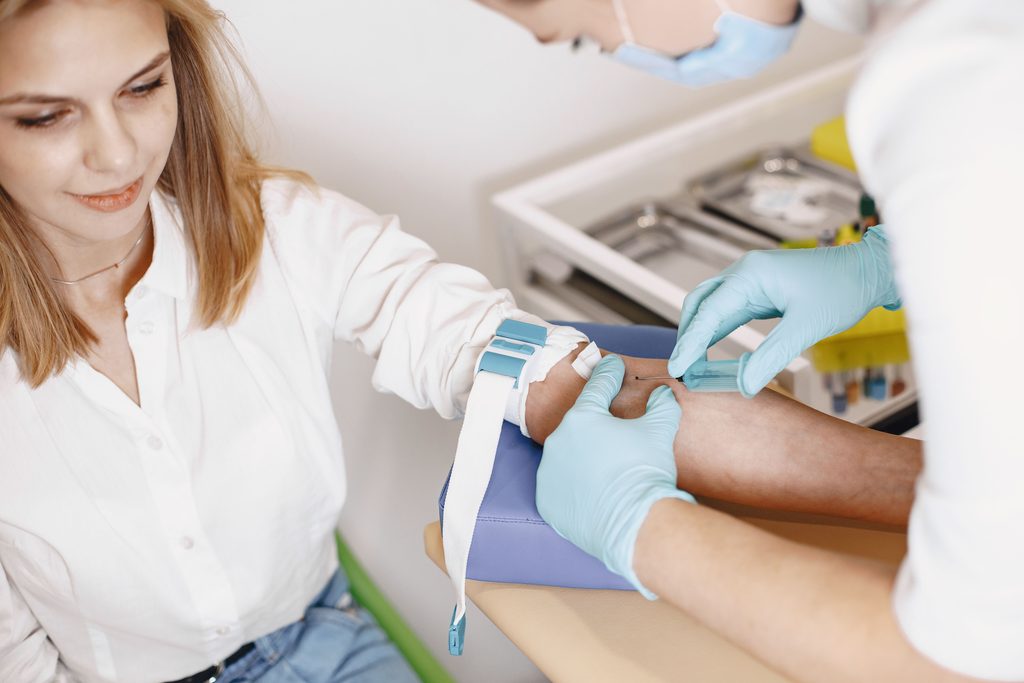
During EBOO, blood is continuously removed through an IV, circulated outside the body through specialized equipment where it interacts with an oxygen-ozone mixture across a membrane, and then returned to the bloodstream. Some modern systems also incorporate filtration.
Unlike a literal oil change, however, your blood is not being replaced—and claims that EBOO simply “cleans all the toxins out of your blood” go well beyond what science has established.
So what does the research actually say?
Here are 7 potential benefits researchers have explored—and why EBOO remains one of the more fascinating, but still experimental, therapies in integrative medicine.
1 EBOO Can Process a Surprisingly Large Volume of Blood
This is one of the biggest differences between EBOO and traditional ozone autohemotherapy.
With conventional major ozone autohemotherapy, a relatively small amount of blood is removed, exposed to a carefully controlled oxygen-ozone mixture and returned to the patient.
EBOO creates a continuous extracorporeal circuit instead.
Research published in the International Journal of Artificial Organs reported that EBOO equipment could process up to approximately 4.8 liters of blood during about one hour of extracorporeal circulation.
That is close to the total blood volume of many adults.
It does NOT mean every blood cell is somehow scrubbed clean, but it helps explain the “human oil change” nickname. Instead of treating one small batch of blood, EBOO allows a much larger volume to circulate through the system.
2 It Creates a Controlled Oxidative Stimulus
This sounds backward at first.
We constantly hear that oxidative stress is bad, so why would anyone deliberately expose blood to an oxidant such as ozone?
The theory involves something called hormesis.
A small, controlled biological stress can sometimes activate the body’s own protective responses. Exercise is an easy example: a hard workout temporarily stresses muscle tissue, but that stress triggers adaptations that can ultimately make the body stronger.
Laboratory research on EBOO has documented measurable changes in oxidative-stress markers after treatment.
Researchers have proposed that carefully controlled ozone exposure may influence antioxidant defenses and cellular signaling.
But there is an enormous difference between controlled medical exposure and simply breathing ozone.
Ozone is harmful when inhaled. Medical ozone procedures therefore require specialized equipment and trained medical professionals.
3 Researchers Have Investigated Its Effects on Circulation
Some of the most interesting human research on EBOO involves peripheral artery disease.
In a controlled clinical trial involving 28 patients with peripheral artery disease, researchers compared EBOO with intravenous prostacyclin.
The EBOO group experienced greater improvement in skin lesions and improvements in symptoms including pain, itching, heavy legs and general well-being.
Interestingly, researchers did NOT find a significant improvement in measured lower-limb vascularization.
That distinction matters.
The study suggested that something beneficial may have been occurring, but it did not prove that EBOO was reopening blocked arteries or restoring circulation in the way some promotional claims might imply.
And because this was a small study, much larger randomized trials would be needed before EBOO could be considered an established treatment for peripheral artery disease.
4 It May Influence Inflammation and Cellular Signaling
One reason ozone therapy continues to attract scientific interest is that ozone does not simply float around inside the bloodstream.
Ozone is extremely reactive.
When appropriately administered outside the body, it rapidly reacts with components of blood, producing secondary molecules that researchers believe may trigger downstream biological responses.
Scientists have proposed effects involving redox signaling, antioxidant systems, immune activity and inflammatory pathways.
Think of ozone less like a substance traveling around your body indefinitely and more like a brief biological signal.
That’s an intriguing concept—but intriguing biology is not the same thing as proven clinical benefit.
Researchers still need to determine exactly which patients, if any, benefit from EBOO and which conditions respond meaningfully.
5 EBOO Is Being Studied for Its Possible Effects on Environmental Toxins
This is where the “oil change” nickname gets especially interesting.
A 2025 case report followed an 88-year-old woman with chronic anemia who also had elevated urinary measurements of several environmental toxins.
After two series of EBOO treatments, researchers reported average decreases of approximately 64.8% in measured mycotoxins, 25.7% in heavy metals and 55.1% in other environmental toxins compared with baseline.
Those numbers sound impressive—but there is a very important catch.
This was ONE patient.
There was no untreated control group, and researchers could not control for changes in the woman’s environmental exposures. A case report can generate an interesting hypothesis, but it cannot establish that EBOO “detoxes” people or prove that EBOO caused those changes.
Still, the findings provide a legitimate reason for researchers to investigate the question in larger controlled studies.
6 Early Research Has Reported Improvements in Certain Symptoms
Early EBOO research has explored the procedure in people with severe peripheral arterial disease and several other medical conditions.
Researchers have reported improvements in certain symptoms and clinical findings in some patients.
However, much of this research is old, small or preliminary.
That matters because extraordinary medical claims require much stronger evidence than a handful of encouraging studies.
There currently isn’t good evidence that EBOO cures autoimmune disease, eliminates chronic infections, reverses cancer, removes every toxin from the body or treats the enormous list of conditions sometimes attributed to it online.
EBOO may eventually prove useful for particular conditions.
We simply don’t have enough high-quality clinical research yet to know where those boundaries are.
7 EBOO Could Help Scientists Better Understand Medical Ozone Therapy
Perhaps EBOO’s most exciting potential benefit right now isn’t a miracle cure.
It’s research.
EBOO provides scientists with another way to investigate how controlled oxygen-ozone exposure interacts with human blood, oxidative signaling, inflammation and antioxidant defenses.
That could eventually help researchers determine which aspects of ozone therapy are useful, which are ineffective and which carry unnecessary risk.
And medicine needs exactly that kind of research.
Excitement should create better studies—not bigger promises.
So Is EBOO Really a “Human Oil Change”?
It’s a catchy nickname.
But scientifically, it’s an analogy—not a medical description.
Your body already has extraordinary systems constantly filtering, processing and eliminating substances through the liver, kidneys, lungs, gastrointestinal tract and lymphatic system.
EBOO doesn’t replace them.
What EBOO does is circulate blood outside the body through specialized equipment while exposing it to a carefully controlled oxygen-ozone environment, sometimes alongside filtration depending on the system being used.
The concept is fascinating.
The evidence is still developing.
And those two things can be true at exactly the same time.
What You Should Know Before Trying EBOO
EBOO is not standard medical treatment for chronic disease in the United States, and patients should be especially cautious about clinics promising that it can cure diseases or “remove all toxins.”
In 2025, the U.S. Food and Drug Administration issued a warning letter concerning certain EBOO/ozone blood-treatment devices marketed for conditions including autoimmune, cardiovascular and respiratory diseases. The FDA stated that the devices lacked required premarket authorization for those uses.
A 2026 umbrella review examining randomized clinical-trial evidence for ozone therapy more broadly also concluded that the available evidence was inconsistent and generally low or very low certainty. Importantly, that review was about ozone therapy overall—not specifically proof that EBOO doesn’t work.
EBOO is also an invasive extracorporeal procedure involving vascular access and anticoagulation, so this isn’t something to approach like a massage, sauna or vitamin infusion.
It deserves the same question we should ask about every emerging therapy:
What does the evidence actually show?
Right now, EBOO sits in an intriguing middle ground.
There are biological mechanisms worth studying. There are small human studies with interesting findings. There are newer observations that deserve follow-up.
But there are also enormous claims online that science has not yet proven.
The “human oil change” may have one of the coolest nicknames in wellness medicine—but the real story is even more interesting when we separate what researchers know from what they’re still trying to discover.
Your body is remarkably sophisticated. Give it good food, movement, sleep, hydration, sunlight, meaningful relationships and appropriate medical care—and stay curious about emerging therapies without abandoning healthy skepticism.
Because wellness shouldn’t be about believing everything.
It should be about learning everything we can.
Let’s Inspire One Another.
Visit MindBodySpiritLife.com often for more evidence-based conversations about the body, mind, spirit and the fascinating science of living well. And if you have a health, healing or life experience that could inspire someone else, consider sharing your story with our community.