9 Benefits of Puppy Pose (That Even an Actual Puppy Would Approve Of)
There are yoga poses that make you feel powerful.
There are yoga poses that make you feel bendy.
And then there’s Puppy Pose — the one that makes you feel open, grounded, and oddly adorable at the same time.
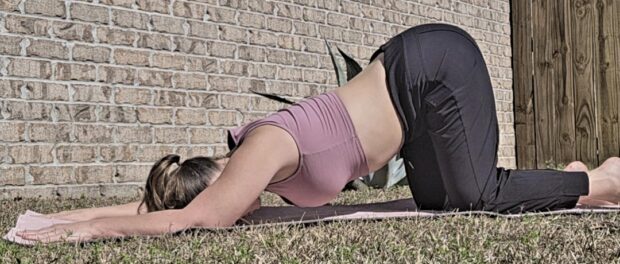
Also known in Sanskrit as Uttana Shishosana (which literally translates to “Extended Puppy Pose”), this posture blends the heart-opening magic of Cobra with the grounding stability of Child’s Pose — without requiring you to growl, bark, or fetch anything.
If you recently filmed yourself doing Puppy Pose with an actual puppy, congratulations. You have officially unlocked peak yoga symbolism.
But beyond the cuteness factor, this pose is seriously powerful.
Let’s break down 9 science-backed (and sanity-saving) benefits of Puppy Pose.
1. Deeply Opens the Shoulders & Upper Back
Modern life = phones, laptops, driving, and that “slightly hunched over human” posture.
Research published in Ergonomics shows that prolonged forward-head posture increases stress on the cervical spine and upper back muscles. Puppy Pose gently counteracts that by:
- Stretching the deltoids
- Opening the chest
- Releasing tension between the shoulder blades
It’s basically the antidote to “text neck.”
If your upper back feels like it’s holding 3 weeks of emails and 12 unresolved conversations, this pose helps melt that tension away.
2. Improves Spinal Mobility
Unlike Child’s Pose, Puppy Pose keeps the hips stacked over the knees while the spine lengthens forward.
This creates a beautiful decompression effect along the thoracic spine (mid-back) — the area many of us barely move enough.
Spinal mobility research consistently shows that maintaining movement through the thoracic region reduces compensatory strain in the neck and lower back. Translation: when your mid-back moves well, everything else complains less.
Your spine loves variety. Puppy Pose delivers.
3. Gently Stimulates the Parasympathetic Nervous System
When your forehead rests on the mat (or a block), something powerful happens.
Light pressure at the forehead stimulates the vagus nerve, which plays a major role in activating your parasympathetic nervous system — your “rest and digest” mode.
Studies on slow breathing and forward-leaning restorative postures show reductions in heart rate and cortisol levels. Even 5–10 minutes of calming yoga can measurably lower stress markers.
So yes — Puppy Pose is cute.
But it’s also a nervous-system whisperer.
4. Encourages Deeper Breathing
Because the chest opens while the abdomen stays relatively neutral, Puppy Pose encourages expansion across the rib cage.
Many adults breathe shallowly (upper chest breathing), especially when stressed. Research from the American Institute of Stress notes that diaphragmatic breathing reduces anxiety and improves oxygen exchange.
In Puppy Pose, you can consciously:
- Inhale into the side ribs
- Expand through the back body
- Slow the breath
Your puppy may be wagging.
Your lungs are expanding.
Everyone wins.
5. Releases Stored Emotional Tension
Heart-openers are often described as emotionally intense for a reason.
A 2018 study in Frontiers in Psychology found that yoga practice improves emotional regulation and reduces perceived stress levels. Backbending and chest-opening poses are frequently associated with feelings of vulnerability and release.
When you stretch the front body, you’re not just opening muscles — you’re softening protective posture.
Sometimes that shows up as a sigh.
Sometimes it shows up as tears.
Sometimes it shows up as your dog licking your face mid-pose.
All acceptable outcomes.
6. Strengthens the Arms (Yes, Really)
While Puppy Pose feels stretchy, your arms are actively engaged.
You’re pressing the palms down.
You’re lengthening through the triceps.
You’re stabilizing the shoulder girdle.
Over time, this builds functional strength — especially helpful for anyone working toward Downward Dog, Dolphin, or handstands.
Sneaky strength training disguised as a stretch?
Classic yoga move.
7. Reduces Lower Back Compression (When Done Correctly)
Because hips stay stacked over knees, the lumbar spine remains relatively neutral.
This means you get extension through the upper spine without collapsing into the lower back — a common issue in deeper backbends.
For people with mild lower back tightness (not acute injury), gentle thoracic extension can reduce strain patterns caused by chronic flexion (aka: sitting all day).
Tip: Engage your lower belly slightly to support the spine and avoid dumping into the low back.
8. Improves Posture Over Time
Postural correction isn’t about standing like a soldier. It’s about balanced muscle tone.
Studies on yoga interventions show measurable improvements in posture, particularly in individuals with forward-rounded shoulders.
Puppy Pose strengthens the posterior chain while opening the anterior chain — exactly what posture rehab needs.
Do it consistently and you may notice:
- Shoulders sit farther back
- Neck feels longer
- Standing feels lighter
Your future self says thank you.
9. It Reconnects You to Play
Let’s not ignore the obvious.
The name alone invites softness.
In a world obsessed with productivity, Puppy Pose reminds you to:
- Lower your chest
- Stretch forward
- Wiggle your hips a little
- Stay curious
There’s something neurologically powerful about play. Research shows playful activity reduces stress hormones and increases dopamine — the “feel-good” neurotransmitter.
Doing Puppy Pose with a literal puppy? That’s dopamine squared.
How to Practice Puppy Pose Properly
- Start on hands and knees.
- Keep hips stacked over knees.
- Walk hands forward.
- Melt chest toward the floor.
- Rest forehead (or chin for a deeper stretch).
- Breathe slowly for 5–10 breaths.
Optional upgrades:
- Place a block under the chest for support.
- Bend elbows slightly if shoulders are tight.
- Let your actual puppy crawl underneath you for bonus joy.
When to Modify or Avoid
- Shoulder injury? Keep elbows bent and reduce depth.
- Neck sensitivity? Rest forehead on a block instead of dropping chin.
- Pregnancy? Widen knees for space and comfort.
As always, no forcing. Puppies stretch naturally — they don’t yank themselves into shapes.
Why This Pose Feels So Good
Humans instinctively stretch upon waking.
Dogs do it every single day — multiple times.
That forward-reaching, chest-melting movement resets the fascia, stimulates circulation, and wakes up the nervous system.
We didn’t invent Puppy Pose.
We observed it.
Sometimes the most intelligent thing we can do is copy nature.
Final Thought: Stretch Like You Mean It
Puppy Pose isn’t flashy.
It won’t impress anyone at a yoga competition (if that were a thing).
But it quietly strengthens, opens, softens, and regulates your entire system.
It’s a reminder that healing doesn’t have to be intense.
Growth doesn’t have to be aggressive.
And sometimes the wisest move you can make… is to stretch forward and breathe.
Preferably with a wagging tail nearby. 🐾