Barefoot by Choice: What Living Without Shoes for 20 Years Has Taught Me About Health, Autonomy, and Social Conditioning
Opening Scene: The Quiet Shock of Normalcy
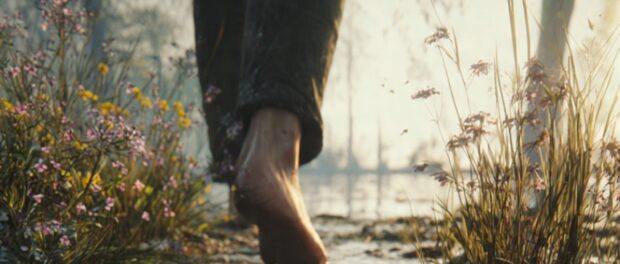
I walk into a store barefoot.
There is no announcement. No hesitation. No internal dialogue reminding me that I am doing something unusual. I am simply moving through my day in the same way I have for years, placing one bare foot in front of the other, feeling the texture of the floor beneath me, aware of my body in space and nothing more.
For me, this moment carries no meaning at all.
For others, it often does.
I notice it not because I am looking for reactions, but because reactions have a way of revealing themselves without invitation. A pause in conversation. A glance that lingers a second too long. A subtle tightening in posture, as if something unspoken has just entered the room. Sometimes there is curiosity. Sometimes concern. Occasionally disapproval. Most often, a quiet confusion that never quite finds words.
What strikes me is not the response itself, but the imbalance it reveals.
I am at ease. Others are unsettled.
This has been the case for so long now that it barely registers consciously. Barefoot living is not something I “do” anymore. It is not a choice I wake up and reaffirm each morning. It is simply how my life is lived, the same way someone else reaches for shoes without thinking, never questioning the habit, never examining its origin, never considering alternatives.
And yet, in moments like these, the contrast becomes visible.
Nothing about my presence disrupts the space. I am clean. I am calm. I am focused on whatever errand brought me there. I am not imposing myself on anyone, not asking for permission, not seeking approval, not demanding understanding. I am simply existing in a way that diverges from expectation.
That divergence alone is enough to create friction.
What fascinates me is how quickly something so ordinary becomes framed as unusual once it steps outside a narrow band of social acceptance. The human foot, after all, is not exotic. It is not dangerous. It is not obscene. It is one of the most basic and universal features of our species. Every person in the room possesses the same anatomy, hidden away beneath layers of leather, rubber, and cultural assumption.
Yet when a bare foot becomes visible in a place where it is not commonly seen, it triggers an almost reflexive response. Not because harm is present, but because deviation is.
Over time, I have come to understand that what people are reacting to is not my lack of shoes. It is my lack of participation in a shared ritual of conformity. Shoes are not merely protective coverings. They are symbols of compliance, markers of belonging, silent signals that say, I am doing what is expected of me.
When that signal is absent, the absence itself speaks.
The longer I have lived this way, the clearer this dynamic has become. Early on, I noticed reactions because they were new. Now, I notice them because they are consistent. Different cities, different states, different years, different social climates. The responses vary in tone, but the underlying disturbance remains remarkably stable.
Someone has stepped outside the script, and no one is quite sure why.
What they do not see, and what I rarely feel the need to explain, is that this way of living stopped being a statement long ago. There is no message attached to my bare feet. There is no argument I am trying to win. There is no conversion I am seeking. There is only continuity. Day after day. Year after year. A body moving through the world in a way that feels honest, functional, and complete.
If there is a shock in the room, it is not because I am doing something radical.
It is because I am doing something natural in a culture that has forgotten how to recognize it.
And the longer I live barefoot, the more I realize that the real question people are grappling with is not whether one should wear shoes at all. It is a quieter, more uncomfortable question, one that lingers beneath the surface of their reactions.
When did something so ordinary become unthinkable?
Section I: Choosing Barefoot Was Not About Rebellion
The first assumption people tend to make is that barefoot living must be a reaction.
A protest.
A statement.
A rejection of something larger than shoes themselves.
This assumption says far more about cultural habits than it does about my own motivations. Modern society is deeply accustomed to framing deviation as opposition. If someone steps outside a norm, it must be because they are pushing against it. If a choice is uncommon, it must be confrontational. If a behavior draws attention, it must be intentional spectacle.
That framing never fit my experience.
I did not wake up one morning determined to defy convention. I did not set out to challenge social expectations or provoke discomfort. I did not announce a new identity or align myself with a movement. What happened instead was quieter, slower, and far less dramatic.
I noticed how my body felt.
That noticing came first, long before any philosophical interpretation followed. Shoes came off in private spaces at first, then in familiar outdoor settings, then gradually in places where shoes were assumed rather than required. Each step outward was guided not by ideology, but by feedback. Balance improved. Awareness sharpened. Movement became more fluid and less forced. The ground stopped being an abstraction and became a source of information again.
Nothing about this process felt rebellious. It felt corrective.
The body has an extraordinary ability to signal what supports it and what interferes with it, but those signals are often muted by habit. Shoes are introduced early in life and reinforced constantly. They become so normal that their presence is rarely questioned. Discomfort is reframed as adjustment. Restriction is labeled support. Disconnection is described as protection.
When I began spending more time barefoot, I was not rejecting shoes in the abstract. I was responding to a simple pattern that kept repeating itself. My body functioned better without them. That observation held true across environments, across seasons, across years.
At some point, continuing to wear shoes began to feel less like participation in society and more like ignoring evidence.
This is where many people misunderstand the nature of choice. They assume that choosing differently requires justification, as if conformity is the default state that needs no explanation. In reality, every habitual behavior is also a choice, even when it is made unconsciously. The difference is that most people never revisit theirs.
Barefoot living became permanent not because I committed to an identity, but because I stopped overriding my own experience. Once that threshold was crossed, putting shoes back on felt artificial, like reintroducing friction that served no meaningful purpose. The absence of footwear was not something I had to defend internally. It made sense in the most practical way possible.
That practicality is what has sustained it.
Rebellion burns energy. It feeds on opposition and requires constant reinforcement. What I have lived for decades could not survive on that fuel. It has endured because it is efficient. It removes barriers rather than creating them. It simplifies rather than complicates.
Over time, I stopped thinking of barefoot living as a decision at all. It became the baseline from which other choices were made. Travel, work, relationships, daily logistics. Everything adjusted naturally around this foundation, not because it demanded accommodation, but because it asked for none.
The irony is that the more unremarkable barefoot living became to me, the more remarkable it appeared to others. People projected intent where none existed. They searched for motives, explanations, and philosophies, assuming that something so visible must be driven by something loud.
In truth, the choice endured because it was quiet.
It did not require belief.
It did not require permission.
It did not require agreement.
It only required honesty with my own experience and the willingness to trust it over inherited assumptions.
That trust, once established, did not remain confined to my feet. It began to influence how I approached other areas of life. What else had I accepted without examination. What else persisted simply because it was common. What other discomforts had been mislabeled as normal.
Barefoot living did not start as rebellion.
It started as listening.
And listening, once practiced long enough, has a way of reshaping everything that follows.
Section II: The Body Remembers What the Mind Forgot
Long before the mind constructs explanations, the body keeps records.
It remembers patterns of movement, strain, balance, and recovery. It remembers what feels supportive and what feels restrictive. It remembers when something aligns with its design and when something interferes with it. These memories do not announce themselves loudly. They accumulate quietly, through repetition, until a pattern becomes impossible to ignore.
When I began living barefoot more consistently, I was not conducting an experiment. I was not tracking metrics or chasing outcomes. I was paying attention. Over time, attention revealed contrasts that could not be dismissed as coincidence.
The first change was awareness.
Without the buffering of thick soles and elevated heels, the ground returned as a source of information. Texture, temperature, subtle shifts in surface. These inputs were not distractions. They were guidance. My gait adjusted naturally. Steps became lighter. Weight distribution became more precise. I stopped striking the ground and started meeting it.
Balance improved not because I practiced balance, but because my body had access to the feedback it needed to maintain it. Small stabilizing muscles in the feet, ankles, and lower legs began doing the work they were designed to do. Movement stopped being something imposed from the top down and became something coordinated from the ground up.
Strength followed awareness.
Over months and then years, my feet changed shape and function. They widened slightly. Toes spread and engaged. Arches became responsive rather than rigid. This was not the result of effort or training. It was the result of use. The body responds to demand with adaptation when it is allowed to do so.
What surprised me most was not the development of strength, but the reduction of injury. When the feet are insulated from sensation, missteps are common. The body receives delayed or muted information, which leads to delayed correction. Barefoot, that delay disappears. The moment something feels off, adjustment happens. Slips become recoverable. Uneven ground becomes negotiable. Caution becomes instinctive rather than forced.
Temperature adaptation followed a similar pattern.
Cold surfaces that initially felt shocking became manageable over time. Heat that might have burned through a shoe sole registered quickly enough to prompt avoidance. The feet learned, just as hands do, how to regulate exposure. Circulation improved. Sensitivity sharpened. Fear diminished because competence increased.
None of this required toughness or endurance in the way people often imagine. It required patience. Adaptation does not rush. The body recalibrates on its own timeline, provided it is not constantly overridden by artificial constraints.
What many people struggle to understand is that footwear does more than protect. It also interferes. By reducing sensation, it encourages heavier steps. By elevating the heel, it alters posture. By narrowing the toe box, it restricts natural spread and engagement. These effects are subtle enough to go unnoticed individually, yet significant enough to reshape movement over a lifetime.
When shoes were removed from the equation, those influences faded. Posture adjusted upward through the spine. Movement became more economical. Fatigue decreased because effort was distributed more efficiently.
These observations did not emerge overnight. They revealed themselves slowly, the way long truths often do. A year passes. Then five. Then ten. Patterns repeat. The same outcomes surface in different environments, under different conditions, without prompting.
At that point, doubt loses its footing.
The body, left to its own intelligence, knows how to move. It does not require constant correction. It requires opportunity. What barefoot living offered was not a technique, but a removal of interference. Once that interference was gone, the body resumed a conversation it had been trying to have all along.
This is what I mean when I say the body remembers.
It remembers how it was designed to function before habits and assumptions layered themselves over instinct. It remembers efficiency over appearance. Responsiveness over rigidity. Connection over insulation.
The mind, conditioned by years of cultural instruction, often forgets these things. It is taught to distrust sensation and defer to convention. Barefoot living reversed that hierarchy. It placed lived experience back at the center of decision-making, where it belongs.
What emerged was not a perfected body or an idealized form. It was a capable one. A body that knew its limits because it could feel them. A body that moved with confidence because it was informed. A body that no longer needed to be protected from the ground because it had relearned how to engage with it.
And once that engagement became familiar, returning to artificial separation felt unnecessary.
Not wrong.
Not forbidden.
Simply redundant.
The body had remembered something essential.
The mind, finally, caught up.
Section III: The First Resistance Is Always Social, Not Physical
The most persistent challenges to barefoot living never came from the ground.
They came from people.
This realization arrived early and was reinforced repeatedly over the years. Uneven terrain, weather, temperature, and surface conditions all presented themselves as variables to be navigated. They required attention, adaptation, and sometimes restraint, but rarely opposition. The body learned quickly how to respond. Social environments, by contrast, did not adapt at all. They reacted.
What surprised me was not the presence of resistance, but its source. The objections were rarely practical. They were procedural. Someone would invoke a rule without knowing it. A policy without having read it. An authority without possessing it. The concern, when examined closely, almost never had anything to do with safety or sanitation.
It had to do with expectation.
Most social resistance begins as discomfort, not conviction. A barefoot individual disrupts a mental checklist that people carry unconsciously. Shirt. Pants. Shoes. The list is not often questioned, but it is deeply internalized. When one element is missing, the list fails, and the failure produces uncertainty. That uncertainty quickly seeks resolution, usually in the form of enforcement.
What becomes visible in these moments is how fragile many social norms truly are. They persist not because they are well reasoned or consistently applied, but because they are rarely challenged. When someone steps outside them calmly and without apology, the norm is exposed as optional rather than absolute.
This exposure unsettles people.
Early on, I learned that arguments were unnecessary and often counterproductive. Most confrontations escalate only when someone feels invited to defend a position. I did not invite that. I did not justify myself. I did not perform compliance or defiance. I simply continued as if nothing unusual were happening, because for me, nothing was.
That composure changed the dynamic.
When questioned, I responded plainly. When told something was not allowed, I listened without reaction. When asked to leave, I assessed the request rather than resisting it reflexively. In many cases, the challenge dissolved on its own. The person enforcing the expectation lost confidence when it was not met with anxiety or submission.
This pattern repeated itself across years and locations. Calm consistency proved more effective than explanation. Most people were not looking to enforce a rule. They were looking to resolve their own discomfort. When my behavior did not mirror their unease, their need to intervene often evaporated.
It became clear that what many people perceive as authority is actually habit backed by assumption. When those assumptions are not reinforced, authority weakens. Barefoot living, practiced without theatrics, has a way of revealing this gently.
Another pattern emerged alongside this one. The more consistent I became, the less resistance I encountered. Familiarity breeds acceptance not because people agree, but because novelty fades. What once triggered scrutiny eventually became unremarkable. The same spaces that initially felt tense grew neutral, then indifferent.
Consistency does not persuade. It normalizes.
This is an important distinction. Persuasion invites debate. Normalization removes the need for it. Over time, my presence barefoot stopped being a question that needed answering. It became part of the environment, neither endorsed nor opposed, simply present.
Physical adaptation had been gradual and cumulative. Social adaptation followed the same arc, but only after I stopped engaging it as a problem to be solved. Once I recognized that the resistance was not rooted in risk or harm, I no longer felt compelled to address it as such.
What remained was an insight into how deeply social conditioning shapes behavior. People are trained to equate deviation with danger, even when no evidence supports the association. They are taught to trust signage over observation, policy over context, procedure over judgment.
Barefoot living exposes this tendency with surprising clarity. It does so not by confrontation, but by contrast. A calm individual moving through public space without shoes presents a simple question to the observer, whether consciously or not.
If nothing bad is happening, why does this feel wrong?
Most people never answer that question. They move on. But the question lingers, and in lingering, it loosens the grip of assumption just a little. Over time, that loosening accumulates. Norms soften. Boundaries blur. What once seemed fixed reveals itself as flexible.
The resistance was never about my feet touching the ground.
It was about what happens when someone demonstrates, quietly and repeatedly, that many of the rules people live by exist only because they are rarely examined.
Once I understood that, social resistance lost its power.
It had never been solid ground to begin with.
Section IV: Autonomy Reveals Itself in Small, Daily Choices
Autonomy is often discussed as an abstract principle, something claimed through declarations, affiliations, or ideological positions. In practice, it rarely announces itself that way. It reveals itself quietly, through repetition, in the accumulation of small choices made without permission and without apology.
Barefoot living sharpened my awareness of this long before I had language for it.
The decision not to wear shoes was never isolated. It affected how I navigated space, how I evaluated environments, how I interacted with systems designed around assumptions of compliance. Each day presented minor moments where a choice had to be made. Do I alter myself to meet an expectation that does not serve me, or do I remain as I am and see what actually happens.
Most of the time, what happened was nothing.
That nothing was instructive.
The fear people project onto autonomy often imagines consequences that fail to materialize. Systems appear rigid until they are tested. Rules feel absolute until someone moves through them calmly. Barefoot living made this visible not through theory, but through lived repetition. Again and again, the anticipated conflict did not occur. Again and again, life continued uninterrupted.
This realization began to extend beyond footwear.
Once you experience how often compliance is optional, you start noticing how many areas of life are governed more by habit than necessity. Clothing norms. Work structures. Housing arrangements. Consumption patterns. Many of these persist not because they are optimal, but because deviation requires the willingness to tolerate momentary discomfort.
Autonomy, I learned, is less about resistance and more about tolerance. The ability to tolerate being misunderstood. The ability to tolerate standing out without performing explanation. The ability to tolerate the pause that follows when you do not immediately conform.
That pause is where freedom lives.
Barefoot living trained me to inhabit it without anxiety. When questioned, I did not rush to reassure. When challenged, I did not scramble to justify. I let the moment unfold. In doing so, I reclaimed control over my own behavior. I was no longer reacting to expectation. I was responding to circumstance.
This shift had practical consequences. I became more selective about environments. Spaces that required constant self-editing lost their appeal. Places that allowed ease and presence became preferable. Over time, my life organized itself around settings that demanded less performance and offered more honesty.
Autonomy simplified my needs.
When you stop arranging yourself around systems, you start arranging systems around what you actually require. Mobility replaced accumulation. Function replaced appearance. Direct experience replaced abstraction. Barefoot living fit naturally into this orientation because it removed a layer of mediation between me and the world.
The ground did not need translation. It offered immediate feedback. That immediacy became a model for other decisions. If something worked, it stayed. If it did not, it was reevaluated. The metric was not approval or tradition, but lived outcome.
What became clear over time is that autonomy is cumulative. Each small choice reinforces the next. Confidence builds not from grand acts of defiance, but from repeated confirmation that you can trust your own judgment. Barefoot living provided that confirmation daily. Every step reinforced the same message.
You can move through the world on your own terms, and the world will often accommodate you more than you expect.
This is not a claim that autonomy is without cost. There are moments of friction. There are spaces that resist difference. There are people who mistake calm independence for challenge. But these moments are fewer than imagined, and their impact diminishes as consistency grows.
The greater cost, I came to see, lies in habitual self-abandonment. In adjusting automatically. In choosing ease of acceptance over integrity of experience. Barefoot living made that trade-off visible. Once seen, it became harder to ignore in other areas of life.
Autonomy does not arrive all at once.
It arrives step by step, grounded in daily practice, reinforced through use. Over time, it stops feeling like freedom and starts feeling like normalcy. That, perhaps, is its most radical quality.
When autonomy becomes ordinary, conformity begins to look like the strange choice.
Section V: Social Conditioning Depends on Inconsistency
Social conditioning survives on hesitation.
It relies on the small pauses people make before acting, the moments where they second-guess themselves and adjust in anticipation of reaction. Conditioning does not require force. It requires uncertainty. As long as people are unsure whether deviation is acceptable, they will self-correct without being asked.
Barefoot living revealed this mechanism with striking clarity.
Early on, I noticed that challenges almost always appeared during moments of transition. Entering a space. Crossing a threshold. Moving from outside to inside. These were the moments when expectation asserted itself most strongly, not because a rule had been broken, but because a script was being evaluated. Does this person belong here. Are they doing what people like them are supposed to do.
In those moments, inconsistency invites intervention.
If I hesitated, explained myself preemptively, or adjusted my behavior in anticipation of disapproval, the social machinery engaged. Questions followed. Authority appeared. The situation escalated. Not because barefoot living was inherently problematic, but because uncertainty had been introduced.
Once I understood this, the dynamic changed.
Consistency became my most effective response, not as a strategy, but as a natural expression of certainty. I entered spaces as though I belonged there, because I did. I moved through environments without scanning for approval, because I did not need it. I responded to inquiries calmly and briefly, without defensiveness or performance.
The result was immediate and repeatable.
Social challenges diminished. Conversations shortened. Authority figures softened or disengaged. In many cases, what had once seemed like opposition evaporated entirely. The absence of internal conflict signaled that there was no external conflict to resolve.
What this revealed is that social norms are not enforced uniformly. They are enforced situationally, often based on cues people receive from one another. Confidence communicates legitimacy. Hesitation communicates vulnerability. Conditioning exploits the latter.
Barefoot living stripped this dynamic down to its essentials. It showed me that many so-called rules persist not because they are mandatory, but because people enforce them against themselves. When someone refuses to participate in that enforcement, the system often falters.
This is not manipulation. It is clarity.
When behavior is consistent, it stops being a question. When it stops being a question, it stops requiring an answer. Over time, what once felt like deviation settles into predictability. Predictability reduces threat. Threat reduction dissolves resistance.
This process is slow but dependable.
I saw it in places I visited regularly. Initial curiosity gave way to recognition. Recognition gave way to indifference. Eventually, my barefoot presence became part of the background. No approval was granted. None was needed. Normalcy was established through repetition alone.
Social conditioning cannot survive that kind of exposure.
It requires novelty to justify attention. It requires uncertainty to justify correction. When neither is present, it loses its footing. The expectation remains on paper, but it no longer animates behavior.
This insight extended far beyond footwear.
I began to see how often people reinforce limits simply by acting as though those limits are absolute. How frequently they comply not because they must, but because they have never tested the boundary with calm persistence. Barefoot living became a daily demonstration that many lines are drawn in pencil, not stone.
The lesson was not that norms should be challenged for their own sake. It was that norms should be examined through use, not assumption. Some exist for good reasons. Others persist only because no one has remained steady long enough to reveal their flexibility.
Consistency does not argue with conditioning.
It outlasts it.
And once conditioning is exposed as conditional, its authority diminishes everywhere, not just in the places where you first noticed it.
That realization marked a turning point.
Barefoot living was no longer just a personal preference or physical practice. It had become a lens through which social behavior itself could be understood, predicted, and navigated with far greater ease.
All because one variable was removed.
Inconsistency.
Section VI: Barefoot Living as a Filter, Not a Message
At a certain point, it became clear that barefoot living was doing more than supporting my body or clarifying social dynamics. It was quietly shaping the contours of my life by filtering what and who remained within it.
This was not something I set out to accomplish. It happened as a consequence of consistency.
When you live in a way that does not ask for validation, you stop attracting people and environments that require performance. Barefoot living signaled, without words, that I was not interested in negotiating my basic comfort to make others feel at ease. That signal repelled some and attracted others. Both outcomes were useful.
The people who felt compelled to correct, instruct, or manage me revealed something important about themselves. They needed compliance to feel secure. They needed visible alignment with norms to trust an interaction. Over time, those people drifted away, either by choice or circumstance. The absence felt less like loss and more like alignment.
In contrast, those who remained were often grounded, observant, and curious in a non-intrusive way. They noticed difference without needing to resolve it. They asked questions, if at all, from a place of genuine interest rather than authority. Conversations unfolded naturally, without the undercurrent of judgment or correction.
Barefoot living made these distinctions obvious early and reliably.
Environments responded the same way. Some spaces demanded uniformity. They required constant adjustment, explanation, or suppression of difference. These spaces became tiring. Others allowed ease. They accommodated variation without friction. Over time, my life organized itself around the latter, not because I was avoiding challenge, but because I was prioritizing coherence.
A filter is not an argument.
It does not persuade or confront. It selects. Barefoot living selected for settings where presence mattered more than presentation. Where function outweighed appearance. Where individuality was not treated as disruption.
This filtering effect extended to opportunity as well. Projects that required me to compartmentalize or perform an acceptable version of myself lost their appeal. Opportunities that aligned with my lived reality gained traction. The more consistent I became, the clearer these distinctions grew.
What I came to understand is that visibility accelerates sorting. When a difference is obvious, it spares everyone the slow process of discovery. Expectations are clarified immediately. Compatibility is tested upfront. Time is saved.
Barefoot living made me legible.
People who could not tolerate visible deviation self-selected out. People who valued autonomy, presence, and lived experience leaned in. No persuasion was required. The filter did the work.
This had an unexpected effect on my sense of peace. I spent less energy managing impressions and more energy inhabiting my life. There was no need to explain myself repeatedly, because the explanation was embedded in my consistency. Either it worked for someone, or it did not. Both outcomes were acceptable.
This stands in contrast to how lifestyle choices are often framed, as messages or identities to be broadcast. I never experienced barefoot living that way. It was not a declaration. It was a condition. A baseline. Something that quietly shaped the terrain without demanding attention.
The clarity that resulted was profound.
Relationships simplified. Logistics streamlined. Emotional labor decreased. When you stop negotiating your presence, the world responds with either accommodation or distance. Both responses provide information. Neither requires resentment.
Barefoot living filtered my life down to what could coexist with it.
What remained was not smaller.
It was truer.
Section VII: What 20 Years Changes That One Month Never Will
Time does something that intention alone cannot.
It removes novelty.
Most experiments feel decisive at the beginning. There is enthusiasm, attention, a sense of purpose attached to the act itself. But novelty is a poor teacher. It exaggerates outcomes and disguises weaknesses. Only time exposes what truly integrates into a life and what merely passes through it.
Barefoot living, extended across decades, shed its novelty long ago.
What remained was not excitement or identity, but infrastructure. It became part of how my life functioned, not something I thought about. That distinction matters. A month barefoot can feel enlightening. A year can feel transformative. Twenty years is something else entirely. It is not an experience. It is a condition.
Over that span, every justification fell away.
There was no longer a story attached to the choice. No internal dialogue reinforcing it. No need to explain it to myself. Shoes were simply unnecessary most of the time. The absence of footwear stopped being meaningful. It became neutral. That neutrality is what short-term experiments never reach.
Time also reveals what does not break.
Trends exhaust themselves. Movements fracture. Practices that rely on motivation collapse under routine. Barefoot living endured because it did not ask for effort. It did not require discipline or reinforcement. It reduced friction instead of adding it. Each day confirmed the same outcome. Moving without shoes continued to work.
Over years, this consistency builds a different kind of confidence. Not the loud confidence of belief, but the quiet confidence of familiarity. I did not wonder whether barefoot living was viable. I knew it was, because it had carried me through seasons, geographies, work, travel, and daily logistics without complication.
Long time horizons also expose adaptation in others.
People who initially reacted strongly stopped reacting at all. Places that once felt charged became ordinary. Conversations that once centered on difference moved on to substance. This shift did not happen because minds were changed. It happened because behavior was normalized through repetition.
Time erodes resistance.
What feels threatening in the short term becomes background in the long term. Barefoot living demonstrated this repeatedly. The same behavior that drew attention early on became unremarkable once it proved itself stable. Stability, over time, is more persuasive than argument.
There is also a bodily difference that only years can produce. Adaptation deepens. Sensitivity refines. Movement becomes instinctive rather than conscious. The feet do not just tolerate the ground. They understand it. That understanding cannot be rushed. It emerges from thousands of ordinary days.
A month teaches curiosity.
A year teaches adjustment.
Twenty years teaches trust.
Trust in the body.
Trust in perception.
Trust in one’s ability to live outside assumption without constant friction.
This is the point where barefoot living stopped being about feet altogether. It became evidence. Evidence that long-term consistency reshapes both internal and external realities. Evidence that many limits are provisional. Evidence that a life built on lived outcome rather than inherited belief becomes simpler, not harder.
What time ultimately removed was doubt.
Not because doubt was defeated, but because it no longer had relevance. The question of whether this way of living was viable had been answered so many times that it ceased to arise.
What remained was continuity.
And continuity, sustained over decades, carries a kind of authority that no explanation ever could.
Section VIII: The Real Question Is Not About Shoes
By this point, the pattern is difficult to ignore.
Shoes were never the subject. They were the surface.
What barefoot living exposed, again and again, was how rarely people revisit the defaults that structure their lives. How often behavior persists simply because it is inherited. How many choices are made once, early on, and then never consciously made again.
Footwear is introduced in childhood and reinforced relentlessly. Few people remember choosing it. It simply arrives, wrapped in necessity and framed as protection. Over time, it becomes invisible, not because it is harmless, but because it is unquestioned. That invisibility is powerful. It allows habits to masquerade as inevitabilities.
Barefoot living disrupted that illusion.
It made the default visible again. It forced a reconsideration, not just for observers, but for me. If something so basic could be optional, what else had I accepted without examination. What other structures in daily life were maintained by repetition rather than relevance.
This is where the discomfort really lies.
Not in the sight of bare feet, but in the suggestion that many things we assume are required are merely customary. Custom is comforting. It offers predictability. It removes the burden of choice. But it also limits awareness. It narrows the range of what feels possible.
Barefoot living widened that range.
Once the mind accepts that deviation can be harmless, even beneficial, it becomes harder to unsee the pattern elsewhere. Housing does not have to look one way. Work does not have to be organized one way. Mobility does not have to depend on fixed structures. Consumption does not have to be constant to be satisfying.
None of these realizations arrived as conclusions. They arrived as questions.
Questions that did not demand immediate answers, but quietly undermined certainty. The kind of questions that linger in the background and slowly rearrange priorities. The kind that turn assumptions into options.
What I came to understand is that freedom rarely arrives as expansion. It often arrives as subtraction. Removing unnecessary layers. Letting go of inherited explanations. Releasing habits that no longer serve a lived reality.
Shoes were one such layer.
Once removed, they revealed not only the ground beneath my feet, but the scaffolding of assumption that had been holding them there in the first place. That scaffolding extended far beyond footwear. It touched identity, comfort, belonging, and fear.
Most people never examine these structures because they do not need to. As long as they remain aligned with the majority, the system rewards them with ease. Barefoot living stepped outside that ease and revealed how conditional it is.
The real question, then, is not whether one should wear shoes.
It is whether one is willing to examine the habits that shape daily life and ask whether they are chosen or merely inherited. Whether comfort is being confused with alignment. Whether protection is being confused with disconnection.
Barefoot living did not provide answers to these questions.
It made them unavoidable.
And once a question becomes unavoidable, life has a way of reorganizing itself around the search for honesty rather than the maintenance of habit.
That, more than anything else, is what barefoot living has taught me.
Not how to walk without shoes.
But how to walk without assumption.
Closing: Living Without Explanation
There comes a point, after enough years lived the same way, when explanation becomes unnecessary.
Not because questions stop arising, but because they no longer require answers. The life itself answers them. Quietly. Repeatedly. Without argument.
I still walk into spaces barefoot. I still move through environments where shoes are assumed. The difference now is not external. It is internal. There is no anticipation. No calculation. No readiness to defend or clarify. I am simply present, inhabiting my body as it is, moving through the world as I always have.
What once felt noticeable has become invisible again, at least to me.
That invisibility is not indifference. It is integration. Barefoot living is no longer a practice layered onto my life. It is woven into it. The feet touching the ground are no more remarkable than breathing. They do not signify. They function.
And in that functionality, something important is revealed.
A life lived without constant explanation becomes lighter. There is less friction between intention and action. Less energy spent managing perception. Less need to negotiate one’s own comfort in exchange for acceptance. What remains is a steady alignment between how the body moves and how the mind relates to the world.
This alignment did not arrive all at once. It was built step by step, day by day, through ordinary repetition. There were no milestones. No finish line. Just continuity.
Over time, that continuity reshaped my understanding of freedom.
Freedom, I learned, is not loud. It does not announce itself or seek recognition. It does not require consensus. It exists in the ability to move through daily life without constant self-correction. In the capacity to trust one’s own experience over inherited scripts. In the willingness to live visibly without demanding to be seen.
Barefoot living did not isolate me from the world.
It grounded me in it.
The ground became familiar. The body became reliable. Social dynamics became predictable. What once felt uncertain resolved itself through use. What remained unresolved lost its urgency. Life simplified, not because it was reduced, but because it was clarified.
I no longer live barefoot to make a point.
I live barefoot because nothing has ever given me a reason not to.
That, in the end, is what makes this way of living definitive. Not belief. Not identity. Not ideology. But longevity. A choice tested by time and found sufficient without reinforcement.
Freedom does not need agreement.
It only needs practice.
And practiced long enough, it stops asking to be understood at all.