9 Fascinating Health Benefits of Freeze-Dried Natto
Tiny, dry, fermented and surprisingly packed with nutrition, freeze-dried natto may be one of the strangest little foods you can add to your wellness routine.
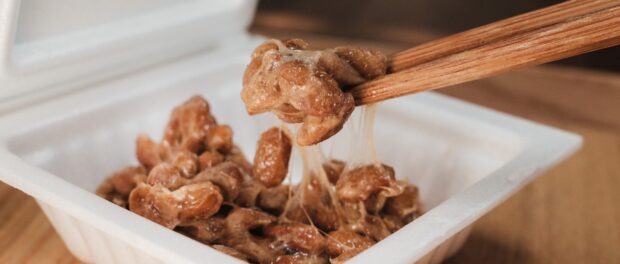
Natto is a traditional Japanese food made by fermenting soybeans with Bacillus subtilis var. natto. Fresh natto is famous for its sticky strings, distinctive smell and texture that people tend to either love—or stare at suspiciously.
Freeze-drying removes most of the water, leaving small, lightweight pieces of fermented soybean that are easier to store and consume. Unlike an isolated nattokinase supplement, whole freeze-dried natto gives you the fermented soybean itself, including naturally occurring nattokinase, vitamin K2 MK-7, protein, fiber, soy isoflavones and, depending on how the product is processed and stored, viable Bacillus subtilis natto bacteria.
Basically, it’s one tiny fermented bean with a surprisingly impressive résumé.
1 It Naturally Contains Nattokinase
Nattokinase is an enzyme produced during the fermentation of natto.
Scientists became interested in nattokinase because of its fibrinolytic activity. Fibrinolysis is the body’s natural process for breaking down fibrin, the protein mesh involved in blood clots.
We need fibrin when we’re injured. Without normal clotting, even a small injury could become dangerous. But the body also needs carefully regulated mechanisms for breaking down fibrin when it is no longer needed.
Human studies using standardized nattokinase preparations have found measurable changes in markers associated with fibrinolysis and coagulation.
That doesn’t mean natto is a substitute for prescription anticoagulants or medical clot-dissolving drugs.
It means this funny little fermented soybean naturally contains an enzyme with genuinely interesting biological activity.
2 It Can Contain Natural Probiotic Bacteria
This deserves much more attention than it usually gets.
Natto is created using Bacillus subtilis var. natto, a spore-forming bacterium. Bacillus subtilis strains are being extensively studied for probiotic properties, partly because their spores are remarkably tough.
Unlike many bacteria, Bacillus spores can tolerate environmental stresses and may survive passage through the gastrointestinal tract better than many non-spore-forming bacteria.
Research has investigated Bacillus subtilis for potential effects on intestinal microbial balance, digestive function and interactions with the immune system.
Whole natto can contain viable Bacillus subtilis natto organisms. Freeze-drying is also widely used as a preservation method for microorganisms because, when performed appropriately, it can allow some bacteria to remain viable during storage.
But here’s the factual part that matters: not every freeze-dried natto product should automatically be assumed to contain the same number of living organisms.
Processing temperatures, freeze-drying methods, storage conditions and the individual product can all affect bacterial survival.
So freeze-dried natto can be a source of viable Bacillus subtilis natto, but if you’re buying a product specifically for its probiotic content, look for a manufacturer that actually tests and reports viable bacterial counts.
Your gut appreciates facts too.
3 It’s Exceptionally Rich in Vitamin K2
Natto is one of the standout food sources of menaquinone-7, better known as MK-7, a form of vitamin K2.
Human studies have demonstrated that eating natto can significantly increase circulating MK-7 concentrations.
Vitamin K is needed to activate several proteins in the body. Some participate in normal blood clotting, while others are involved in bone metabolism.
Research has also demonstrated changes in osteocalcin following natto consumption. Osteocalcin is a vitamin-K-dependent protein produced by bone-forming cells.
So the K2 in natto isn’t simply sitting there looking impressive on a nutrition chart.
Your body actually uses it.
4 It May Help Support Healthy Bones
Calcium and vitamin D usually get top billing when we talk about bones, but vitamin K deserves a chair at the table too.
Vitamin K is necessary for the normal activation of osteocalcin.
Research in Japanese populations has found associations between habitual natto consumption and favorable measurements related to bone health.
A systematic review and meta-analysis involving more than 2,000 people found habitual natto consumption was associated with higher circulating MK-7, favorable osteocalcin measurements and modestly higher bone mineral density.
However, much of this research is observational.
That means scientists can identify an association, but they cannot say natto alone caused stronger bones.
Promising?
Absolutely.
Proof that natto prevents osteoporosis?
Not yet.
And keeping that distinction is what separates good health information from health hype.
5 Fermentation Gives an Ordinary Soybean a Makeover
Natto isn’t simply a dried soybean.
Fermentation changes its chemistry.
During fermentation, Bacillus subtilis var. natto produces enzymes and transforms compounds already present in soybeans.
Nattokinase is produced during this process, while natto also becomes particularly rich in vitamin K2 MK-7.
Fermentation can also change soy isoflavones, converting some into aglycone forms that are generally absorbed more readily than their glycoside forms.
So fermentation isn’t simply responsible for natto’s famous smell and sticky strings.
It’s essentially running a tiny biochemical factory.
Soybean goes in.
Natto comes out.
6 You Get the Whole Fermented Food
This is one of the biggest differences between whole freeze-dried natto and an isolated nattokinase supplement.
Nattokinase is one enzyme.
Natto is food.
Whole freeze-dried natto can provide protein, fiber, vitamin K2, soy isoflavones, naturally occurring nattokinase and fermentation-derived compounds.
And depending on how the product is produced and stored, it may also deliver viable Bacillus subtilis natto.
That doesn’t automatically mean whole natto is superior to an isolated nattokinase supplement. They’re different products and shouldn’t be treated as interchangeable.
But nutritionally, whole natto brings a lot more to the party.
Nattokinase may be the celebrity.
Natto brought the whole entourage.
7 Nattokinase May Help Support Healthy Blood Pressure
Researchers have investigated nattokinase for possible effects on blood pressure.
In one randomized, double-blind, placebo-controlled human trial, people with prehypertension or mild hypertension received 2,000 fibrinolytic units of nattokinase daily for eight weeks.
The nattokinase group experienced greater reductions in systolic and diastolic blood pressure than the placebo group.
A systematic review and meta-analysis of randomized controlled trials has also found modest average reductions in blood pressure associated with nattokinase supplementation.
But there’s an important catch.
These studies generally used standardized nattokinase preparations.
They don’t prove that eating a particular number of freeze-dried natto pieces will deliver the same dose or produce exactly the same effect.
The amount of active nattokinase in whole natto can vary with bacterial strain, fermentation, processing, storage and the individual product.
That’s why it’s possible to be excited about the science without stretching it beyond what researchers actually demonstrated.
8 It May Affect Other Cardiovascular and Clotting Markers
Nattokinase has also been investigated for effects on several markers involved in coagulation and cardiovascular health.
In one human study involving 45 participants, nattokinase supplementation for two months was associated with reductions in fibrinogen and coagulation factors VII and VIII.
Other small human studies have found short-term changes in markers associated with fibrinolysis and coagulation following oral nattokinase.
But larger and longer research has produced more cautious results.
A three-year randomized controlled trial involving 265 adults found that taking 2,000 fibrinolytic units of nattokinase daily did not significantly slow the progression of subclinical atherosclerosis compared with placebo.
That’s important.
Biologically active doesn’t automatically mean clinically proven to prevent disease.
Nattokinase has interesting effects that deserve continued research, but claims that natto has been proven to clean arteries, dissolve dangerous clots or prevent heart attacks go beyond the evidence currently available.
There’s plenty to be excited about without turning one little fermented soybean into Superman.
9 Freeze-Drying Makes Natto Surprisingly Convenient
And then there’s the benefit that doesn’t require a laboratory to appreciate.
Fresh natto is sticky.
Really sticky.
Pick up a bite and you can create strings long enough to make you wonder whether you’ve accidentally ordered fermented Spider-Man food.
Some people absolutely love it.
Others aren’t ready for that level of commitment before breakfast.
Freeze-drying removes most of the water and changes the physical experience dramatically.
You’re left with small, lightweight pieces of fermented soybean that are much easier to store, transport and consume.
When appropriately sized, they can even be swallowed whole with water.
No chopsticks.
No sticky strings.
No natto hanging from your chin.
And because removing water dramatically reduces water activity, properly freeze-dried and packaged natto can have much greater storage stability than fresh natto.
One Important Thing Everyone Should Know
One of natto’s greatest nutritional features—its unusually high vitamin K2 content—is also why some people need to be particularly careful with it.
Warfarin works by interfering with vitamin-K-dependent clotting pathways.
Human studies have demonstrated that eating natto can substantially increase circulating MK-7.
People taking warfarin should therefore talk with their healthcare provider before adding natto to their diet or substantially changing how much they consume.
Natto is made from soybeans, so people with a soy allergy should avoid it.
People who are severely immunocompromised should also discuss concentrated or probiotic products containing live microorganisms with their healthcare professional.
And neither natto nor nattokinase should ever be used to self-treat symptoms of a blood clot, pulmonary embolism, stroke or heart attack. Those require immediate medical attention.
The Bottom Line
Freeze-dried natto may look like nature made her own funny little health pills, but what you’re actually consuming is an ancient fermented food with a surprisingly complicated nutritional profile.
Inside those tiny dried soybeans can be naturally occurring nattokinase, vitamin K2 MK-7, protein, fiber, soy isoflavones, fermentation-derived compounds and viable Bacillus subtilis natto bacteria when the processing and storage conditions preserve them.
Human research confirms that eating natto can substantially increase circulating vitamin K2. Research also suggests possible benefits related to bone metabolism, while nattokinase continues to be investigated for its effects on fibrinolysis, blood pressure, coagulation and cardiovascular health. Bacillus subtilis strains are also being studied for their potential probiotic effects in the digestive system.
Some findings are impressive.
Others are mixed.
And plenty of questions remain unanswered.
That’s science.
We don’t need to turn every fascinating food into a miracle cure to appreciate what it may offer.
Sometimes the most interesting health discoveries aren’t invented in a laboratory.
Sometimes they’ve been sitting on someone’s dinner table for hundreds of years while science slowly figures out just how interesting they really are.
Keep learning, keep asking questions and keep discovering new ways to nourish your body, mind, spirit and life.
Visit MindBodySpiritLife.com often for more fascinating health and wellness discoveries, and if you’ve learned something through your own journey that could help someone else, share your story with us.
Let’s Inspire One Another.



Leave a comment