8 Reasons Your Calf Muscles Are Called Your Second Heart
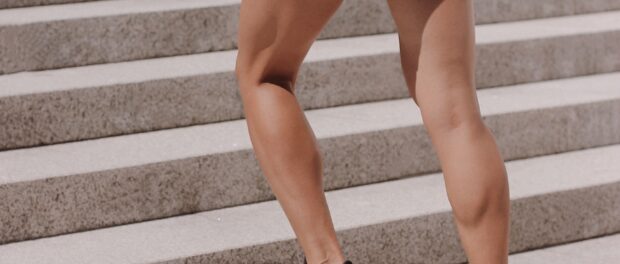
Most of us spend a lot of time thinking about our heart—but almost no time thinking about the two powerful muscles sitting quietly below our knees.
Your calves do a whole lot more than make your legs look good in shorts.
Every time you walk, climb stairs, stand on your toes, dance, skate, or simply flex your ankles, your calf muscles help push blood upward against gravity and back toward your heart.
That’s why the calf muscle pump is sometimes nicknamed the “second heart.”
No, your calves aren’t literally another heart. But when it comes to circulation in your lower body, they’re pretty impressive.
And considering how much time modern humans spend sitting, they deserve a little more attention.
Here are 8 reasons your calves may be some of the most underrated muscles in your entire body.
1 Your Calves Help Pump Blood Back Toward Your Heart
Getting blood down to your feet is relatively easy.
Getting it back up is the tricky part.
Your heart pumps blood through arteries throughout your body, but blood returning from your legs has to travel upward against gravity.
That’s where your calf muscles come in.
When the calf muscles contract, they squeeze the deep veins running through the legs. One-way valves inside those veins help direct blood upward toward the heart rather than allowing it to fall backward.
This mechanism is known as the calf muscle pump.
Researchers studying venous circulation have described the calf pump as an important part of normal blood return from the lower extremities.
Every step you take essentially gives that pump another squeeze.
2 Your Calves Can Move a Surprising Amount of Blood
Your legs contain a substantial portion of your body’s blood volume when you’re upright.
Gravity encourages blood to accumulate in the lower extremities, particularly when you’re standing still.
Muscle contractions help counteract this.
Walking creates repeated cycles of calf contraction and relaxation, compressing veins and helping propel venous blood toward the heart.
This is one reason standing perfectly still can sometimes feel surprisingly uncomfortable compared with walking around.
Your calves would rather work than just hang out.
3 Sitting Turns Down Your Calf Pump
Here’s where modern life becomes a problem.
When you’re sitting for hours, your calf muscles aren’t contracting very much.
That means the calf muscle pump becomes considerably less active.
Blood flow through the legs slows, and prolonged immobility can contribute to venous pooling.
Research has repeatedly associated long periods of sedentary behavior with poorer vascular and metabolic health.
Even otherwise active people aren’t necessarily immune to the effects of prolonged sitting.
You can exercise for an hour in the morning and still spend another 8 hours barely moving your calves.
The solution doesn’t have to be complicated.
Stand up.
Walk around.
Do some calf raises.
Move your ankles.
Your second heart likes little movement snacks throughout the day.
4 Even Your Ankles Help Keep the Pump Going
You don’t necessarily need to go for a 5-mile walk every time you’ve been sitting too long.
Simple ankle movement activates muscles involved in circulation.
Try this while you’re sitting:
Point your toes.
Pull them toward you.
Circle your ankles.
Lift your heels.
Then lift your toes.
Those movements contract and relax muscles around the lower leg and ankle.
This is one reason ankle-pumping exercises are commonly encouraged during periods of immobility, including long trips and recovery situations when appropriate.
Your body was designed to move far more frequently than most of us give it credit for.
5 Strong Calves Matter More as We Get Older
Calves aren’t only about circulation.
They’re critical for walking.
Every time you push your foot off the ground, your calf muscles help propel your body forward.
The gastrocnemius and soleus muscles contribute to ankle plantar flexion—the movement that occurs when you rise onto your toes.
As we age, losing muscle mass and strength can affect walking speed, balance, mobility, and independence.
Research on aging consistently shows that maintaining lower-body strength is associated with better physical function.
Your calves are part of that equation.
Think about all the things that require strong lower legs:
Walking uphill.
Climbing stairs.
Getting up on your toes.
Balancing.
Running.
Dancing.
Skating.
Hiking.
Catching yourself when you stumble.
Those two muscles behind your shins are doing far more than most people realize.
6 Your Calf Muscles Help Fight Gravity All Day
Humans have an interesting circulation problem.
We decided to stand upright.
Now our cardiovascular system has to deal with gravity constantly pulling blood toward our feet.
When you’re lying down, blood doesn’t have to travel nearly as far vertically.
Stand up, and suddenly the cardiovascular system has a much bigger job.
Your body responds using several mechanisms, including changes in blood-vessel tone, heart rate, and muscle activity.
The calf muscle pump is one important piece of that system.
Walking gives it something productive to do.
Standing motionless doesn’t.
Maybe that’s another reason the simplest health advice keeps coming back to the same thing:
Walk.
7 Calf Raises May Be One of the Simplest Exercises You’re Not Doing
You don’t need fancy equipment to wake up your calves.
Stand behind a chair or counter for balance.
Slowly raise your heels.
Pause.
Lower them.
Repeat.
That’s a calf raise.
You can eventually progress by increasing repetitions, slowing the movement, using one leg at a time, or adding resistance if appropriate for you.
And there’s another fascinating piece of research involving the deeper calf muscle called the soleus.
A study published in iScience investigated a seated movement researchers called the soleus pushup.
Participants repeatedly activated the soleus muscle while seated.
Under the specific laboratory conditions studied, researchers reported meaningful improvements in post-meal glucose and insulin responses.
That doesn’t mean calf raises are a treatment for diabetes or that moving one muscle replaces whole-body exercise.
But it demonstrates something fascinating:
Muscles are metabolically active tissue.
Even a muscle most people rarely think about can influence how the body handles energy when it is repeatedly activated.
8 Walking May Be One of the Best Ways to Keep Your Second Heart Working
Here’s the beautiful part.
You don’t need to memorize complicated anatomy to take advantage of your calf pump.
You already know how to activate it.
Walk.
Every step contracts muscles.
Every contraction helps squeeze veins.
Every ankle movement keeps your lower legs working.
Walking also provides benefits far beyond circulation.
Large studies have associated greater daily step counts with lower risks of cardiovascular disease and premature death, although the exact amount needed varies with age, health, and activity level.
And you don’t necessarily need 10,000 steps.
Research increasingly suggests meaningful benefits occur well below that famous number, with additional benefits often accumulating as activity increases.
Take the stairs.
Walk while you’re talking on the phone.
Park farther away.
Dance in the kitchen.
Do 20 calf raises while brushing your teeth.
Walk around the house during commercials.
Move your ankles while sitting at your desk.
Tiny movements add up.
Your Body Was Built to Move
We sometimes make health incredibly complicated.
We count calories.
Track macros.
Buy supplements.
Measure sleep.
Monitor heart rate.
Analyze every ingredient.
And meanwhile, one of the most powerful things we can do for our bodies is something humans have been doing forever.
Get up and move.
Your heart may be the star of your circulatory system, but your calf muscles are hardworking supporting actors.
Every time you walk, those muscles contract and help move blood out of your lower legs and back toward your heart.
So the next time you’ve been sitting too long, remember:
You’ve got another pump waiting below your knees.
Give it something to do.
Stand up.
Stretch.
Walk.
Dance.
Skate.
Do a few calf raises while waiting for your coffee.
Your body doesn’t need movement to be perfect.
It just needs movement to happen.
And sometimes the smallest things we do consistently become the biggest investments in our future health.
At Mind Body Spirit Life, we believe learning how beautifully the body was designed can inspire us to take better care of it—one small choice at a time.
Keep learning. Keep moving. Keep questioning. And most importantly, keep inspiring one another.
Have a health discovery, personal experience, or story that could inspire someone else? Come share it with the Mind Body Spirit Life community.
Let’s Inspire One Another.