
7 Ways to Practice Gratitude Without Pretending Life Is Perfect

Some days, gratitude comes easily. The sunshine feels wonderful, someone makes you laugh, and your coffee reaches that magical temperature between “burned my tongue” and “why am I drinking disappointment?”
Other days, someone tells you to “count your blessings,” and you would prefer to count the minutes until everyone leaves you alone.
Both kinds of days belong to a real life.
Being thankful does not require you to declare that everything is wonderful. You can appreciate your family and still feel exhausted. You can love your life and wish parts of it were different. You can thank God for helping you through a difficult season while being very honest about how difficult that season has been.
Gratitude gives us a way to notice what supports us, even when something else hurts.
Research offers a practical reason to try it. A 2025 study, “A Meta-Analysis of the Effectiveness of Gratitude Interventions on Well-Being Across Cultures,” published in Proceedings of the National Academy of Sciences, combined 145 papers involving 24,804 participants across 28 countries. Gratitude practices produced small average improvements in well-being. Small is a realistic word here: think a helpful daily habit, rather than an emotional makeover delivered overnight. (PNAS)
The encouraging part is that practicing gratitude can be simple, personal, and honest. No inspirational throw pillow required.
1 Make Room for Gratitude and Your Actual Feelings
Try replacing “I should be grateful instead of upset” with “I can be grateful and upset.”
That little word “and” leaves room for your whole experience.
“I’m thankful someone checked on me, and I’m having a hard day.”
“I appreciate this opportunity, and I’m nervous.”
“I’m grateful for the years we shared, and I miss them terribly.”
These statements do not cancel themselves out. They describe what it means to be human.
A gratitude practice becomes much more approachable when you stop using it to grade your emotions. Sadness does not mean you failed the thankfulness test. Frustration does not erase your appreciation. You do not need to smile through something painful to prove you recognize the good in your life.
Before naming something you appreciate, take a moment to acknowledge how you feel. You might write, “Today I feel overwhelmed. One thing that helped was my daughter making me laugh.”
Now your gratitude has somewhere honest to stand.
2 Start With Something Small Enough to Believe
On a difficult day, “I am thankful for my beautiful, abundant life” may feel like a sentence written by someone who has never dealt with your laundry pile.
Start smaller.
A clean towel. A warm meal. A dog resting its head on your knee. Someone who answered the phone. Five peaceful minutes on the porch.
The size of the blessing does not determine whether it counts.
In their 2003 study, “Counting Blessings Versus Burdens,” psychologists Robert Emmons and Michael McCullough studied people who recorded things they appreciated, hassles, or comparison experiences. Gratitude groups showed benefits on several measures, with positive emotions the most consistent finding across the 3 experiments. The study helped establish gratitude journaling as a practice researchers could test. (PubMed)
For your own practice, ask one manageable question: “What made today a little easier?”
Perhaps the answer is that you found a parking space in the shade. In Florida, that deserves its own thank-you note.
3 Get Specific About What You Appreciate
“I’m thankful for my friends” is meaningful. “I’m thankful my friend listened without trying to fix everything” tells a fuller story.
Specific details give you something concrete to remember.
You might appreciate that your mother taught you a recipe, your neighbor brought your trash can up the driveway, or your child sent a message just to say hello. Perhaps someone remembered an important date or made you feel welcome when you were nervous.
Try finishing this sentence: “I appreciated _____ because _____.”
“I appreciated our walk because we had time to talk without rushing.”
“I appreciated that meal because someone noticed I needed help.”
“I appreciated my body today because it carried me through a difficult afternoon.”
You do not need impressive answers. You need answers that mean something to you.
And yes, “I appreciated my stretchy pants because dinner was excellent” is a perfectly respectable entry.
4 Tell Someone What Their Kindness Meant
Some gratitude belongs on paper. Some deserves to reach the person who inspired it.
A short message can be enough: “Thank you for checking on me yesterday. It helped me feel less alone.”
Or: “I noticed how patient you were with me, and I really appreciated it.”
The value is in naming what the person did and why it mattered. You can thank someone for practical help, encouragement, a shared memory, or simply being steady during an unsteady time.
A 2023 paper, “The Effect of Expressed Gratitude Interventions on Psychological Wellbeing,” analyzed 25 randomized controlled trials involving 6,745 participants. Expressed gratitude practices, such as gratitude letters, showed a small average benefit for well-being compared with neutral activities. Individual experiences and study results varied. (Springer Nature Link)
Keep your message natural. Nobody needs a formal acceptance speech because they brought you soup.
“Thank you. That meant a lot to me” can do the job beautifully.
5 Appreciate the Moment While You Are Still in It
Sometimes a good moment happens, and we rush past it on our way to the next responsibility.
The dog is being adorable, but the dishwasher needs unloading. The sunset is beautiful, but we are checking messages. Someone is laughing beside us, and our minds are already planning tomorrow.
When you notice something you appreciate, pause long enough to experience it.
Listen to the laughter. Notice the warmth of the mug in your hands. Look at the sky before reaching for your camera. Enjoy the hug without mentally reorganizing the refrigerator.
There is no required timer. A few unhurried breaths are a reasonable place to begin.
You might quietly tell yourself, “I’m glad I get to have this moment.”
Your day may still contain bills, appointments, and a dog who believes the couch belongs exclusively to him. But this particular moment can have your attention.
Let the good part happen before you move on.
6 Bring Honest Gratitude Into Prayer
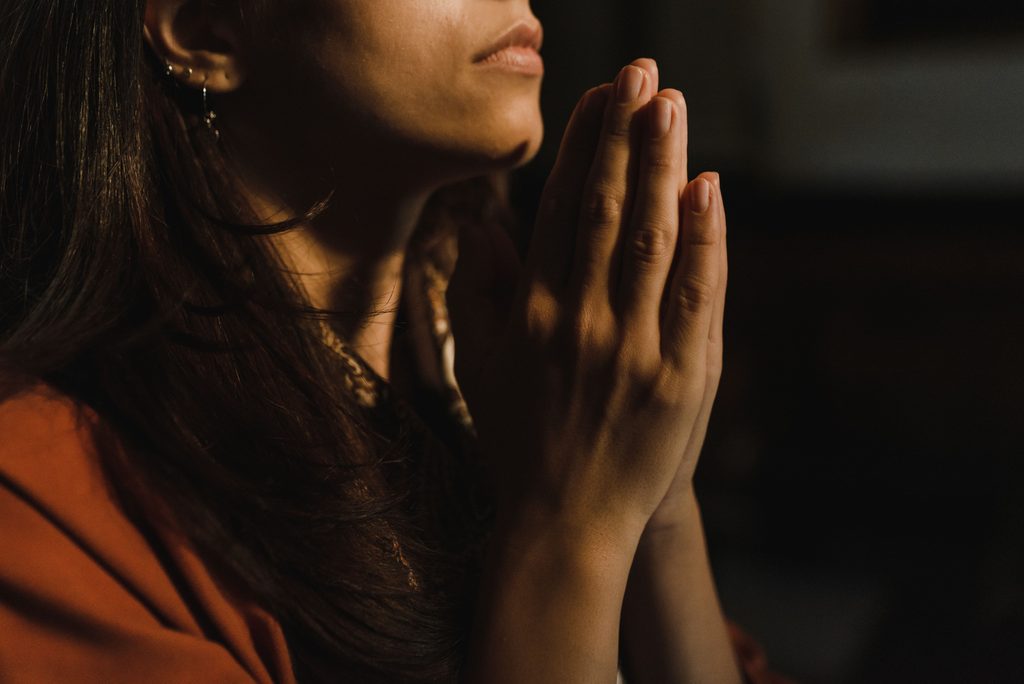
For people of faith, gratitude can be part of a conversation with God that includes appreciation, questions, grief, and requests for help.
You can pray, “Thank You for the person who showed up for me. Please help me with what I still do not know how to carry.”
You can be thankful for today’s strength while asking for tomorrow’s.
The Psalms contain both praise and lament, offering a biblical example of bringing a wide range of feelings into prayer. Faith leaves room for honest words.
A simple evening practice might include 3 thoughts: something you are thankful for, something that hurt, and something you need help with.
“Thank You for time with my family. I’m hurting over what happened today. Please give me wisdom for the next step.”
You do not have to turn every hardship into a lesson before you are allowed to pray about it. Sometimes the most sincere words are, “Lord, I’m tired. Thank You for staying with me.”
7 Keep Gratitude Gentle Enough to Continue
A gratitude habit should fit your life.
You might write one sentence before bed, share something you appreciated over dinner, or take a quiet moment after your morning coffee. Choose a routine that feels useful rather than another assignment waiting to judge you.
If writing 3 things every day starts producing entries like “chair, spoon, oxygen,” consider changing the approach.
Try these prompts instead:
“What kindness did I notice?”
“What did I enjoy that I usually overlook?”
“Who helped me feel understood?”
“What am I glad I made time for?”
On a very hard day, your answer may be, “I’m thankful I asked for help.” That counts.
Gratitude can sit alongside counseling, medical care, rest, boundaries, and practical support. If depression is persistent or daily life feels increasingly difficult, getting professional help is a valuable act of care. You deserve support without having to earn it by appearing cheerful.
Let your practice be something you can return to, even after you miss a day. Nobody is checking your gratitude attendance sheet.
A meaningful life includes joyful moments, difficult seasons, unanswered questions, and people who help us keep going. Gratitude invites us to notice the parts that nourish us while telling the truth about the rest.
Today, choose one small thing you appreciate. Give it a little attention. If someone made that moment possible, let them know.
Then visit MindBodySpiritLife.com often for more ways to care for your mind, body, and spirit. Have a story about finding gratitude during a difficult season, or a simple ritual that helps you notice the good? Share it with our community. Your experience may help someone else find a moment of hope.
Let’s Inspire One Another.